
Opinions
Otto von Bismarck, The Marketing Genius Who Built an Empire and Hastened His Own Downfall

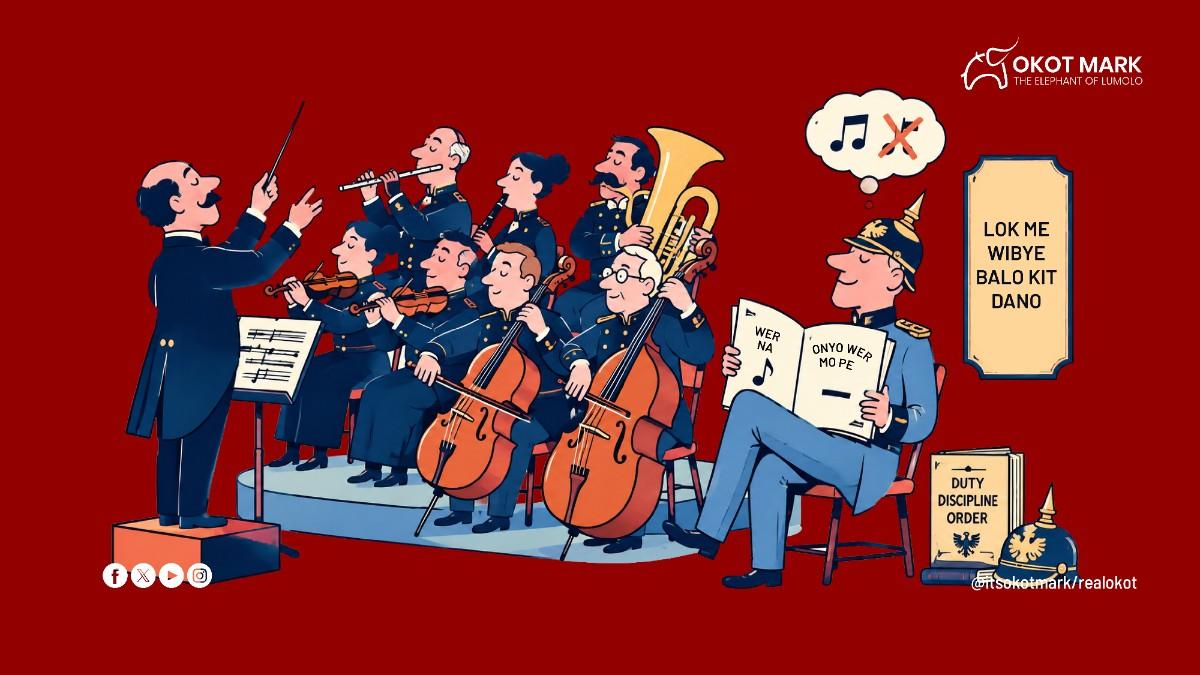
Otto von Bismarck, known as the Iron Chancellor, was one of the most effective political marketers in modern history. Long before the invention of public relations firms, spin doctors, or social media, he demonstrated a masterful command of narrative control, strategic communication, and personal branding. Through calculated leaks, emotional appeals to nationalism, and a carefully crafted public image, Bismarck unified Germany in 1871. However, the very marketing strategies that propelled him to greatness also played a subtle but significant role in his dramatic fall from power in 1890.
Bismarck operated in an era of emerging mass media and rising nationalism. He understood that wars and treaties alone would not suffice; he needed to shape public perception. His most famous act of media manipulation occurred in 1870 with the Ems Dispatch. After a relatively polite diplomatic exchange between King Wilhelm I of Prussia and the French ambassador, Bismarck edited the telegram to make it sound deliberately insulting to both sides. He then leaked this provocative version to the press, knowing it would act like a “red rag” to the French bull. The result was exactly as he intended: France declared war, Prussia won decisively, and the victory paved the way for the proclamation of the German Empire at Versailles.
Beyond this masterstroke, Bismarck built a powerful personal brand. He presented himself as the gruff, no-nonsense Junker aristocrat in military uniform with a cigar in hand, iron will intact. Portraits, statues, and favorable newspaper coverage reinforced the image of a larger-than-life unifier who stood above petty politics. This “Iron Chancellor” persona helped him maintain support among German nationalists, even when his policies such as the Kulturkampf against Catholics or the anti-socialist laws generated opposition.
He also proved adept at narrative framing. When facing domestic rivals, Bismarck positioned the Prussian-led state as the defender of German unity and stability. He combined repression with innovation, introducing early welfare programs to undercut socialist appeal while portraying himself as a pragmatic protector of the working class. In foreign policy, he carefully painted the new Germany as a “satiated power” that sought peace after unification, all while maintaining a complex web of alliances designed to isolate potential enemies.
For nearly three decades, this combination of realpolitik and sophisticated storytelling kept Bismarck firmly in control. He transformed fragmented German states into a major European power and built a lasting myth around his leadership. However, the same branding genius that contributed to his success ultimately led to his downfall. By making himself the indispensable hero of the Reich, Bismarck created a highly personalized system of governance with few institutional checks. His cult of personality left little room for a smooth transition of power.
When the young and ambitious Kaiser Wilhelm II ascended the throne in 1888, he quickly grew tired of living in the shadow of this towering figure. Wilhelm wanted to rule in his own right and pursue a more assertive “New Course” in foreign and domestic policy. Bismarck’s larger-than-life image, once an asset, became a liability, positioning him as a rival rather than a loyal servant. After months of growing tension over policy direction and ministerial authority, Wilhelm forced Bismarck’s resignation in March 1890. The man who had engineered Germany’s birth was unceremoniously pushed aside by the very monarch he had helped elevate.
In the years that followed, Bismarck leaned even harder into his public persona through memoirs and press interviews, reinforcing the narrative of the wise elder statesman betrayed by youthful impulsiveness. This final act of personal branding helped shape historical memory many later blamed Wilhelm II’s decisions for Germany’s 20th-century tragedies but it offered little consolation to the chancellor who had lost real power.
Bismarck’s story offers a timeless lesson in leadership and communication. Exceptional marketing and branding can achieve extraordinary results, forging nations and reshaping history. Yet when that branding becomes too closely tied to one individual and when institutions remain weak, it can lead to isolation and removal. The tools that build empires can also limit their builders’ longevity.
In today’s world of personal brands, thought leadership, and digital narratives, Bismarck remains a fascinating case study: proof that the art of influence is powerful, double-edged, and as relevant now as it was in the 19th century.

Entertainment
Why Ugandan Musicians Should Avoid Political Factions in 2025
For an industry built on connection and expression, such divisions create unnecessary discord.

Music and politics have long been intertwined, from the protest anthems of the American civil rights movement to the anti-apartheid rhythms of South Africa’s Hugh Masekela. Songs have served as powerful advocacy tools, amplifying the marginalized’s voices and reflecting societal struggles. In Uganda, this connection runs deep whether through independence-era unity songs or the politically charged praise tunes of Idi Amin’s regime in the 1970s. As the country nears the 2026 presidential election, the intersection of music and politics has intensified, drawing artists into a highly polarized landscape. Given the risks involved, Ugandan musicians would be wise to distance themselves from political factions in 2025.
The current music scene is fraught with tension. President Yoweri Museveni’s National Resistance Movement (NRM) and Bobi Wine’s National Unity Platform (NUP) dominate the political discourse, often enlisting musicians as supporters or critics. Prominent figures like Bebe Cool and Eddy Kenzo have sided with Museveni, while others, such as King Saha, have faced backlash for their perceived opposition sympathies. King Saha’s recent assault in Ibanda after a politically charged performance is a stark reminder of these dangers. Even artist rivalries, such as Pallaso versus Alien Skin, carry political undertones, turning music into an ideological battleground. For an industry built on connection and expression, such divisions create unnecessary discord.
Why should Ugandan musicians remain neutral in 2025? First, it threatens the core essence of their craft. Music has traditionally served as a unifying force, bridging tribal and social divides with melodies and lyrics that resonate across communities. Taking political sides risks alienating a segment of their audience. Fans may turn against artists whose affiliations oppose their own. The existing NRM-opposition divide has already fractured audiences, weakening the cohesive cultural role that music plays.
Another major concern is personal safety. Uganda’s political climate is volatile, with dissenters facing significant repercussions. Opposition-aligned musicians, like Bobi Wine, have endured government crackdowns due to the rise of a rebel-like movement, while ruling-party supporters, like Bebe Cool, have faced hostility from rival factions. In such an unpredictable environment, neutrality is not just a stance. It is a safeguard against potentially life-threatening consequences.
Financially, political alignment can be detrimental. Uganda’s music industry is not particularly lucrative, relying heavily on corporate sponsorships, endorsements, and fan support. Companies prefer to remain apolitical and often avoid controversial figures. Similarly, fans may boycott artists whose political leanings they oppose. In an economy where every performance and sponsorship deal matters, choosing a side could significantly reduce an artist’s income opportunities.
Moreover, political landscapes shift. While Museveni has held power since 1986, history has shown that no regime lasts forever. Artists who tie their careers to a specific political figure or party risk irrelevance if the political tide turns. Remaining neutral allows them to sustain their careers regardless of leadership changes.
Some may argue that musicians have a duty to engage politically, citing Bobi Wine’s transition from artist to political force as proof that music can drive change. While this is true, it comes at a significant cost ie. division, career instability, and potential threats to personal safety. Musicians can still use their platforms to highlight injustices and advocate for social change without being drawn into partisan conflicts.
Ugandan musicians face a critical decision, become pawns in a political struggle or uphold their role as the nation’s cultural heartbeat. By steering clear of political factions, they can preserve artistic freedom, foster unity, and safeguard their futures. In a time when politics increasingly dictates direction, the boldest move might be to continue singing their own song.
Opinions
What is the fuss about QR Codes, Is it worth replacing Flyers with them?
Replacing physical flyers with QR codes risks alienating large segments of the population, undermining campaign effectiveness, and ignoring the country’s unique socio-economic and cultural realities.

In the fast-evolving world of marketing, the shift from traditional to digital tools has become a global trend. Marketers are increasingly turning to QR codes as a sleek, eco-friendly alternative to physical flyers, promising cost savings, real-time analytics, and a connection to the digital consumer. However, in Uganda; a nation known for its markets, resilient communities, and stark contrasts, this shift could prove to be a costly error. Replacing physical flyers with QR codes risks alienating large segments of the population, undermining campaign effectiveness, and ignoring the country’s unique socio-economic and cultural realities. Here are the reasons why this trendy pivot might be a poor choice in Uganda and why physical flyers still hold irreplaceable value.
QR codes, those pixelated black-and-white squares, have surged in popularity worldwide. They offer a compelling proposition: a quick scan with a smartphone instantly directs users to websites, promotions, or interactive content, all without the clutter of paper. For marketers, the appeal is evident because it reduces printing costs, leaves a smaller environmental footprint, and the ability to track engagement in real-time is emense. In urban centers like Kampala, where smartphone adoption is on the rise and tech-savvy youth are eager for innovation, QR codes have gained traction. For example, the Uganda Tourism Board has experimented with QR codes at international expos to promote destinations like Bwindi Impenetrable Forest.
However, Uganda is not a monolithic society. Beyond the bustling streets of Kampala and in the outskirts, Jinja, or Gulu lies a country where digital infrastructure is lacking, rural life is predominant, and traditional communication remains crucial. The assumption that QR codes can seamlessly replace physical flyers overlooks these disparities, potentially leaving millions behind in a nation still navigating the analog-digital divide.
Although smartphone usage is growing, projected to reach over 40% of Ugandans by 2025, according to industry estimates many still rely on basic feature phones that cannot scan QR codes. Rural areas, which are home to nearly 75% of the population, lag far behind urban centers in technology adoption. Even among smartphone users, digital literacy remains a challenge. A trader in Mbale or a farmer in Lira may own a smartphone but lack the knowledge to scan a code or navigate its output. In contrast, physical flyers require no technical skills but just eyes and curiosity making them a universally accessible medium.
QR codes are ineffective without internet access, which remains a luxury for many Ugandans. Despite improvements in mobile network coverage, rural areas struggle with weak signals, frequent outages, and high data costs. The Uganda Communications Commission reported that only about 30% of the population had reliable internet access in 2024. For someone living in a village near Lake Victoria, scanning a QR code could require an expensive trip to a trading center with better reception or it could simply be impossible. A physical flyer, handed out at a market or pinned to a tree, delivers its message instantly, without requiring any data bundle.
Data affordability is an ongoing challenge. Even with declining costs averaging around UGX 200 per MB in 2025, many Ugandans prioritize their data for essential uses like WhatsApp or calls rather than marketing promotions. Scanning a QR code that links to a flashy website could quickly consume a user’s data plan, turning a promotional tool into a financial burden. On the contrary, once printed, physical flyers impose no additional cost on the recipient, leveling the playing field in a country where over 20% of people live below the poverty line.
In Uganda, physical objects carry significant weight. A flyer handed out by a boda boda rider, pinned to a church noticeboard, or shared among neighbors at a market becomes a communal touchstone. It serves as a keepsake, a conversation starter, and a lingering reminder. In contrast, QR codes are ephemeral and intangible and lack this staying power. In a society where oral traditions and face-to-face interactions thrive, the tactile nature of a flyer aligns more closely with how Ugandans connect and communicate.
Globally, QR codes have a downside: they can link to phishing sites or malware. In Uganda, where digital scams such as mobile money fraud have eroded trust, this risk is particularly concerning. Awareness of cybersecurity is still developing, and a suspicious QR code on a poster may deter rather than attract potential users. Physical flyers, being static and verifiable, provide a safer and more trusted alternative in a landscape where skepticism towards technology prevails.
The elderly, visually impaired, and those without smartphones, the common demographics in Uganda are effectively excluded by QR codes. A grandmother in Soroti or a blind vendor in Kampala cannot scan a code, but they can read a flyer with large print or hear its contents from a neighbor. Physical flyers can be adapted to meet these diverse needs, while QR codes cannot, risking a marketing strategy that sidelines the very people it aims to reach.
Uganda’s informal economy thrives on human networks like vendors, hawkers, and community leaders who spread information organically. Physical flyers fit this model perfectly, being passed hand-to-hand or displayed in high-traffic areas like trading centers. QR codes, requiring posters or signage with clear instructions, demand a more structured rollout that conflicts with this fluid distribution model. A code on a billboard may work in Kampala, but in a rural market, it often falls flat.
Eliminating physical flyers in favor of QR codes isn’t merely impractical, it’s a gamble that could cost marketers their audience. Uganda’s digital divide means that a tech-only approach excludes the majority, especially in rural areas dominated by agriculture and informal trade. Imagine a farmer in Arua being handed a flyer about a new fertilizer at the weekly market. She takes it home, shares it with her cooperative, and acts on it. Replace that flyer with a QR code, and the chain breaks. She has no smartphone, no data, and no opportunity.
The push for QR codes often reveals a Western bias assuming a world of ubiquitous smartphones, affordable data, and tech fluency that Uganda has yet to fully realize. It’s a classic case of innovation outpacing readiness, a lesson observed elsewhere in Africa. For instance, mobile money services like M-Pesa in Kenya succeeded because they built on existing habits and infrastructure. QR codes, by contrast, require a leap that many Ugandans are not equipped to make.
Marketers in Uganda should resist the allure of QR code exclusivity and adopt a hybrid strategy. Physical flyers remain a vital resource, cheap, reliable, and rooted in local culture. Pair them with QR codes for the digitally inclined, and you have a campaign that bridges worlds rather than burning bridges. Innovation is essential, but it must serve the people, not the other way around. In Uganda, the humble flyer still reigns, it’s simply too valuable to let fade away.


A restriction on smallholder maize would trade food security for a cash-crop bet Uganda has already lost once

What Uganda’s Maize Story Tells Us About Future Opportunities

Uganda Launches Evacuation of Nationals from South Africa Amid Rising Xenophobic Violence


-

 Entertainment2 years ago
Museveni’s 2025 Copyright for Musicians breakdown
-

 Sports1 year ago
The Transformative Impact of World Cup Qualification for Uganda
-

 Business2 years ago
The 9 worst mistakes you can ever make at work
-

 Policies2 years ago
Breakdown of the Uganda Police Force Annual Crime Report 2024
-

 Business2 years ago
Uganda’s Ministry of Finance projects significant growth opportunities in 2025
-

 Entertainment2 years ago
Uganda Cracksdown On Vulgar Music Content | Gloria Bugie, Shakira Shakira, targeted
-

 Policies2 years ago
Is Uganda’s Shs10m Fine the WORST Thing for Cohabiting Couples?
-

 Health2 years ago
Breaking down the Malaria Vaccine Rollout in Uganda