
Business
What Ugandans Need to Know About Carbon Credits
Uganda entered this arena through the Kyoto Protocol’s Clean Development Mechanism (CDM) in 2005, an international agreement established in 1997 that allows poorer countries to earn credits by cutting emissions.


In a world racing to combat climate change, carbon credits have emerged as a tool that could put money in Ugandans’ pockets while helping to save the planet. But what exactly are they, how do they work in Uganda, and what should everyday Ugandans understand about this growing system? Here’s the breakdown.
A carbon credit is like a certificate that proves one metric ton of carbon dioxide (CO₂),or its equivalent in other greenhouse gases has been either prevented from entering the atmosphere or removed from it. Think of it as a trade: companies or countries that pollute can buy these credits to “offset” their emissions, while places like Uganda, with forests and green projects, can sell them to fund development and conservation. It’s a global market worth $909 billion in 2023, and Uganda has a slice of the action.
Uganda entered this arena through the Kyoto Protocol’s Clean Development Mechanism (CDM) in 2005, an international agreement established in 1997 that allows poorer countries to earn credits by cutting emissions. One of the first successes was the Nile Basin Reforestation Project in Rwoho Central Forest Reserve, initiated in 2006. By planting pine and native trees across 2,015 hectares, it became one of Africa’s earliest CDM forestry projects, selling credits to global buyers via the World Bank. Another notable example is Uganda’s municipal waste composting program, which in 2012 earned $215,135 by turning trash into compost in towns like Mukono and Jinja, thereby reducing 16,549 tons of CO₂.
Beyond the CDM, voluntary projects have gained momentum. The Trees for Global Benefit program, run by ECOTRUST since 2003, has involved 15,000 farmers planting 2.3 million trees across 14 districts, absorbing over 2 million tons of CO₂ by 2022. Farmers receive payments for growing trees, combining climate action with income. Uganda’s forests covering 14% of the land and wetlands make it a natural fit for projects like REDD+ (Reducing Emissions from Deforestation and Forest Degradation), which could protect areas like Mabira while generating credits.
For Ugandans, carbon credits can translate into real financial benefits. Projects like these have funded tree planting, renewable energy, and improved waste management, while helping Uganda meet its pledge to cut emissions by 24.7% by 2030, as outlined in its 2023 climate plan. Globally, the voluntary market alone reached $2 billion in 2022. Uganda could tap into this resource to boost rural livelihoods and infrastructure.
However, this system is not without its flaws. Some projects have encountered challenges. The Kachung plantation, backed by Norway, Sweden, and Finland, promised carbon credits through pine and eucalyptus planting but ended up displacing locals, causing a food security crisis, as reported by the Oakland Institute in 2019. Critics argue that such initiatives can prioritize profits over people. Land gets designated for trees, leaving less available for crops, and payments don’t always reach those who need them most, especially women. A 2022 Global Forest Coalition study found similar risks in voluntary projects.
Moreover, there’s the “additionality” problem: Are these projects truly cutting emissions, or would they have happened anyway? Globally, up to 85% of certain offset projects have been deemed ineffective. In Uganda, sluggish government action and vague regulations mean the country risks missing out on the $104 billion carbon market, as noted on social media in March 2025. Weak oversight and capacity could allow unscrupulous deals to slip through, shortchanging communities.
So, what should you know and advocate for? First, transparency. Inquire about who’s behind these projects, how credits are sold, and where the money goes. Are farmers and locals receiving a fair share, or are foreign companies reaping the profits? Second, fairness. Projects should enhance livelihoods without displacing individuals or harming food production. Third, results. Demand evidence that these efforts genuinely reduce emissions. Uganda’s forests and wetlands are too valuable to waste on greenwashing.
The government is making progress and its 2023 climate plan focuses on carbon financing but it is moving too slowly. Ugandans can urge leaders to expedite policies, train officials, and establish clear regulations so the country doesn’t lose out. Communities should also have a say in what projects happen on their land. After all, Uganda has lost 10% of its forest cover since 1990. Carbon credits could help reverse that, but only if managed responsibly.
Carbon credits offer Uganda an opportunity to combat climate change and fund development, from tree-planting income for farmers to cleaner towns. However, they are not a panacea. The system can yield either benefits or burdens, depending on how it is managed. Stay informed, ask questions, and hold leaders accountable because this is about much more than CO₂. It’s about Uganda’s future.









Business
Bank of Uganda Sets A Bold Push Toward Digital Payments With New Cash Withdrawal Limits.
The Bank of Uganda has introduced new over-the-counter cash withdrawal limits effective 1 January 2027, capping individuals at UGX 50 million daily and corporates at UGX 250 million. The policy aims to accelerate digital payments while sparking debate on its impact on cash-reliant sectors.

The Bank of Uganda (BOU) has announced significant changes to cash withdrawal limits that will take effect on January 1, 2027. Under the new policy, individual customers will be limited to withdrawing a maximum of UGX 50 million per day and UGX 500 million per week from their accounts at commercial banks. Corporate accounts will have higher limits, allowing withdrawals of up to UGX 250 million daily and UGX 2.5 billion weekly. These limits apply only to over-the-counter cash transactions and do not affect electronic transfers, such as RTGS, EFTs, mobile money, or other digital payment channels.
This move represents one of the most direct interventions by Uganda’s central bank to accelerate the shift from cash to digital financial services. For years, BOU has encouraged electronic payments through various initiatives, highlighting their benefits, including faster transaction speeds, greater transparency, reduced costs related to printing and handling physical currency, and improved security. The new limits build on the observed growth in digital adoption, as many Ugandans and businesses already prefer mobile money, internet banking, and card payments for both everyday and larger transactions.
The policy also allows for flexibility in exceptional cases. Financial institutions under supervision can request exemptions for clients in cash-intensive sectors such as agriculture, fuel distribution, or large-scale trading after conducting proper risk assessments and obtaining BOU approval. This provision acknowledges that not every economic activity can transition overnight to fully digital methods, particularly in rural areas or sectors dominated by cash due to infrastructure limitations or client preferences.
Uganda’s economy has experienced rapid digital transformation. Mobile money transactions have surged in both volume and value, while platforms like the Uganda National Interbank Settlement System continue to mature. BOU officials argue that an excessive reliance on cash imposes hidden costs on the financial system, including risks of theft, money laundering, and inefficiencies in supply chains. By capping large cash withdrawals, the central bank aims to encourage both individuals and businesses to adopt safer, traceable digital alternatives that also generate valuable data for credit scoring and economic planning.
For the average salary earner or small business owner, daily life may not change dramatically, as most transactions fall well below the new thresholds. However, the real impact will likely be felt by high-net-worth individuals, large corporations, and operators in sectors that frequently handle substantial cash volumes. These groups will need to plan ahead, diversify their payment methods, and perhaps strengthen their relationships with banks to secure necessary exemptions.
Banks themselves will also need to adapt. Customer service teams will require training on the new rules, while relationship managers will play a greater role in advising clients on digital alternatives. Over time, this shift could drive innovation in financial products tailored to a less cash-dependent economy.
The success of this policy will depend on effective execution and complementary measures. If digital infrastructure reliably expands into rural districts, transaction fees decrease, and public trust in electronic systems continues to grow, Uganda could emerge as a regional leader in cashless financial services. Ongoing challenges regarding cybersecurity, digital literacy, and last-mile connectivity will need attention.
As the January 1, 2027 deadline approaches, businesses and individuals would be wise to review their cash handling practices and explore digital tools that align with this new reality. The Bank of Uganda’s message is clear: the future of money in Uganda is increasingly digital, and the transition is not just encouraged but actively facilitated from the top.
Business
The Hidden Cost of Overloading Viewers: How Aggressive YouTube Ads Fuel Ad Fatigue and Damage Brands
A more serious concern arises when this accumulated frustration spills over. Viewers not only start disliking the ads but also develop genuine resentment toward the brands behind them.
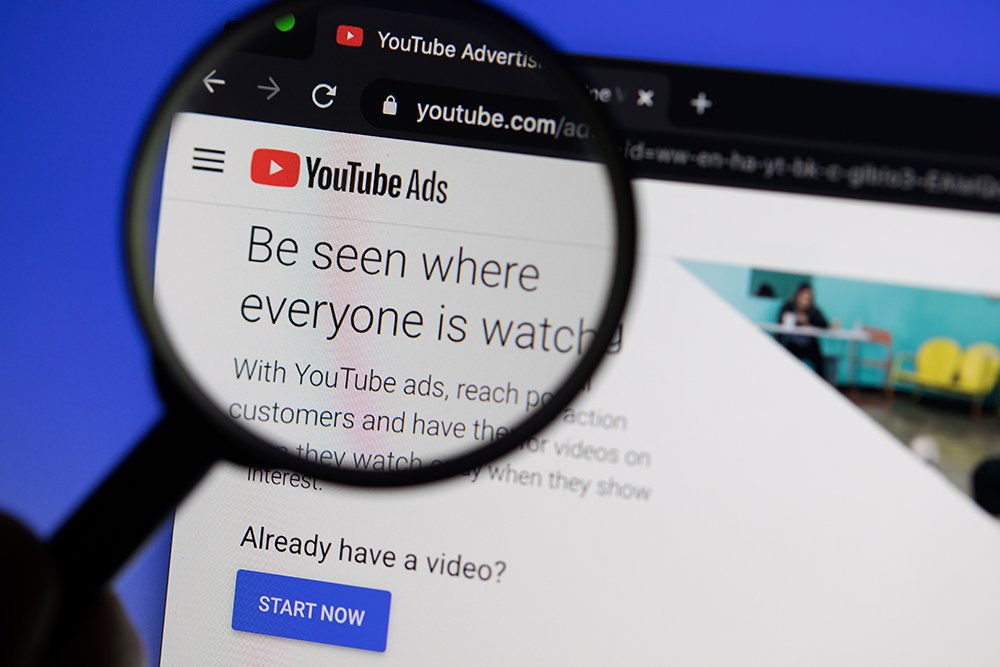
Ad fatigue goes beyond mere annoyance; it reflects a psychological reaction that arises from how our brains process repeated interruptions and unwanted content. When viewers are exposed to excessive advertising, it generates irritation and a sense of lost control, known as psychological reactance, which leads to negative associations that transfer directly from the advertisement to the brand being promoted. As a regular YouTube viewer without a Premium subscription, I have personally witnessed this decline in user experience. Over the years, YouTube has gradually increased its ad volume through tactics like double pre-rolls, unskippable mid-roll placements, frequent irrelevant ads, and back-to-back interruptions. The availability of the platform’s own ad-free subscription subtly confirms that the current advertising strategy deteriorates overall user satisfaction.
A more serious concern arises when this accumulated frustration spills over. Viewers not only start disliking the ads but also develop genuine resentment toward the brands behind them. Ads that feel irrelevant or overly repetitive invade personal time and attention. When users provide feedback by marking an ad as irrelevant, only to continue seeing almost identical follow-up creatives from the same advertiser, it suggests that the feedback system is either malfunctioning or prioritized below revenue concerns. This cycle deepens resentment toward both the platform and the brand, turning neutral or passive viewers into actively hostile ones.
While advertisers and marketers cannot directly control YouTube’s platform policies, we can avoid contributing to this damage. Rushing high volumes of campaigns onto the platform in hopes of achieving conversions may yield short-term gains in impressions, but it poses a substantial long-term risk to brand health. An advertisement that harms brand sentiment is often more damaging than not running an ad at all. Such campaigns may accelerate the shift towards ad-free subscriptions, gradually undermining the effectiveness of paid reach over time.
A Better Approach; Earn Attention Rather Than Seize It, The most effective strategy is to prioritize contextual relevance over broad demographic targeting. Targeting based on age, location, or general interests often feels intrusive, while contextual relevance appears natural and genuinely helpful. For instance, when someone watches a cooking tutorial, an advertisement for kitchen tools or ingredients integrates seamlessly rather than feeling forced. Someone following a pottery tutorial connects better with promotions for clay, wheels, or kilns rather than an ad for a random food delivery service. The tighter the alignment between the advertisement and the viewer’s immediate interest, the less intrusive the experience becomes, minimizing the risk of negative emotional responses.
Respectful ad formats are also critical in reducing fatigue. Skippable advertisements, sponsored segments, and native integrations like creator mentions are generally perceived as less invasive than unskippable interruptions. If unskippable ads are necessary, they should be limited to six seconds or less, with the first one to three seconds designed to deliver an engaging hook that captures attention immediately. These practices demonstrate respect for the viewer’s time and sense of control.
Frequency management is one of the most powerful tools available. Overexposure is one of the quickest ways to turn indifference into hostility. Encountering the same ad five or more times in one session often triggers aversion. Advertisers should use platform tools to enforce strict impression caps such as three to five views per user per day or week; based on campaign objectives. Creatives should be rotated every two to six weeks, and frequency metrics should be diligently monitored to prevent fatigue
Every advertisement must justify the interruption it causes. The interaction should function as a true value exchange entertaining the viewer, providing useful information, solving a real problem, or delivering a clear incentive like a discount or practical tip. A thirty-second ad that wastes time breeds resentment, while one that feels helpful or enjoyable is more likely to be forgiven or even appreciated.
Shifting budget allocations away from purely interruptive formats towards channels that align with existing user intent is a crucial step. Using search advertisements on platforms like Google and YouTube, forming influencer partnerships, collaborating with creators, engaging in content marketing, and building community efforts tend to generate goodwill rather than resentment. This approach resonates with users because it aligns with their interests instead of forcing their attention.
Moreover, measurement should go beyond superficial metrics, such as Click-Through Rates, which don’t indicate whether engagement arises from genuine interest or irritation. More effective indicators include brand lift studies, analysis of comment sentiment, social listening data, and qualitative feedback. These tools provide better insights into potential negative associations. Declining View-Through Rates, increasing skip percentages, and the emergence of hostile comments are critical early warning signals that need immediate attention.
Bottom line, creating effective advertising is challenging, and meaningful conversions are often hard-earned. However, digital marketing achieves lasting success when attention is treated as something to be earned rather than taken. Campaigns that consistently respect context, timing, and user experience tend to foster genuine loyalty over the long term. Conversely, those that disregard these principles accelerate the shift toward ad-free subscriptions and undermine brand equity in ways that are difficult to reverse.
This perspective does not argue against advertising itself, but rather advocates for advertising that is sustainable and respectful of the audience it aims to reach. Have you observed brands that successfully reduced aggressive tactics after noticing clear signs of audience fatigue? I would be interested in hearing your experiences or examples.
Business
The Meta Trap: How One Bot Strike Can Liquidate Your Digital Career
As a digital communicator, this ban doesn’t just erase a social profile; it obliterates gigs and revenue streams.

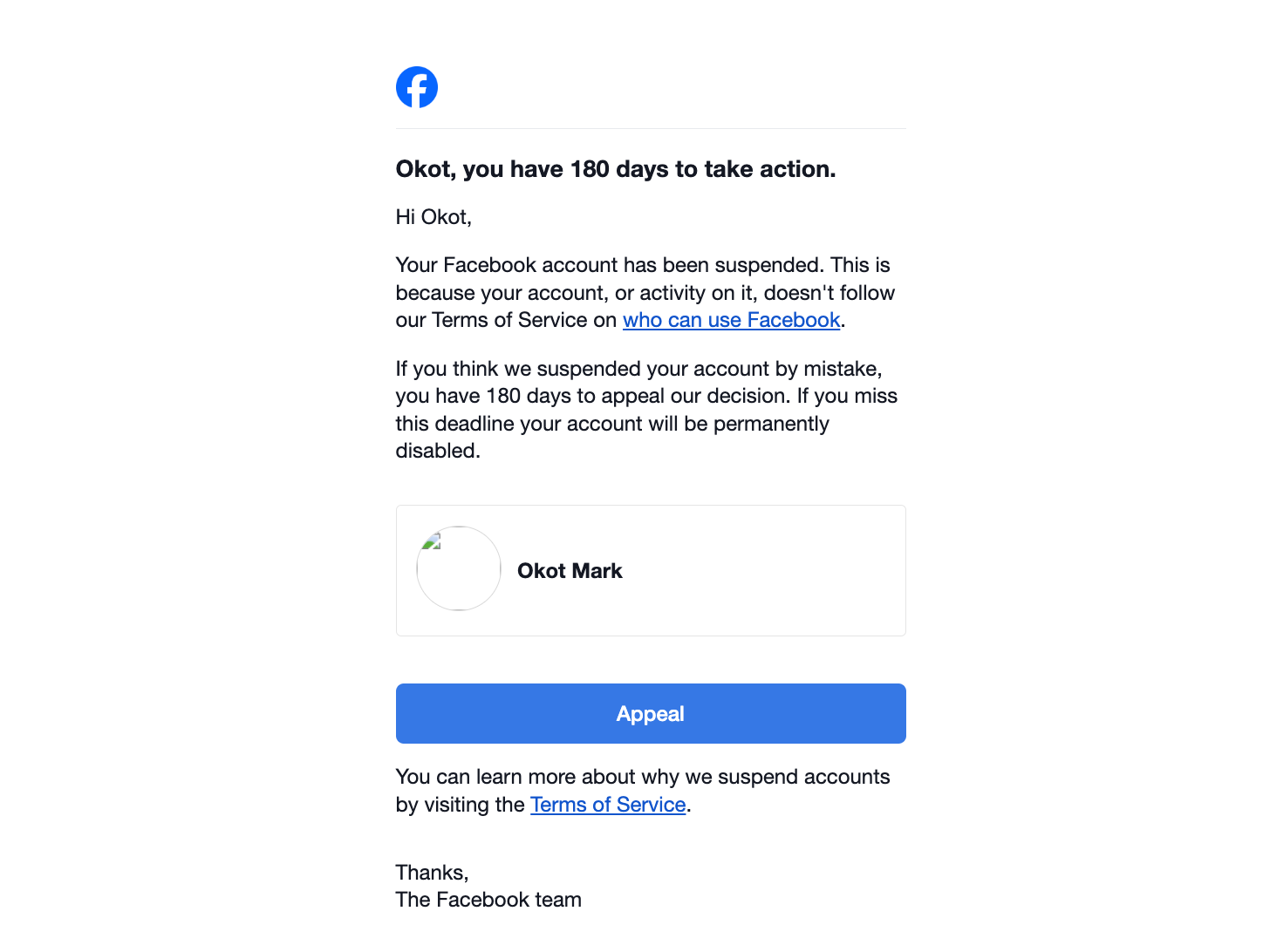
In the fast-paced world of digital communications and marketing, your online presence is your livelihood. For me, it was the foundation of multiple businesses: a music artist page, a clothing brand, a design company, and numerous client accounts. But on December 9th, everything changed with a single email from Meta. What started as a routine suspension notice escalated into a permanent ban overnight, stripping me of access to my entire professional ecosystem. No explanation. No recourse. Just gone. This isn’t just my story, it’s a cautionary tale for anyone relying on Meta’s platforms for their career.
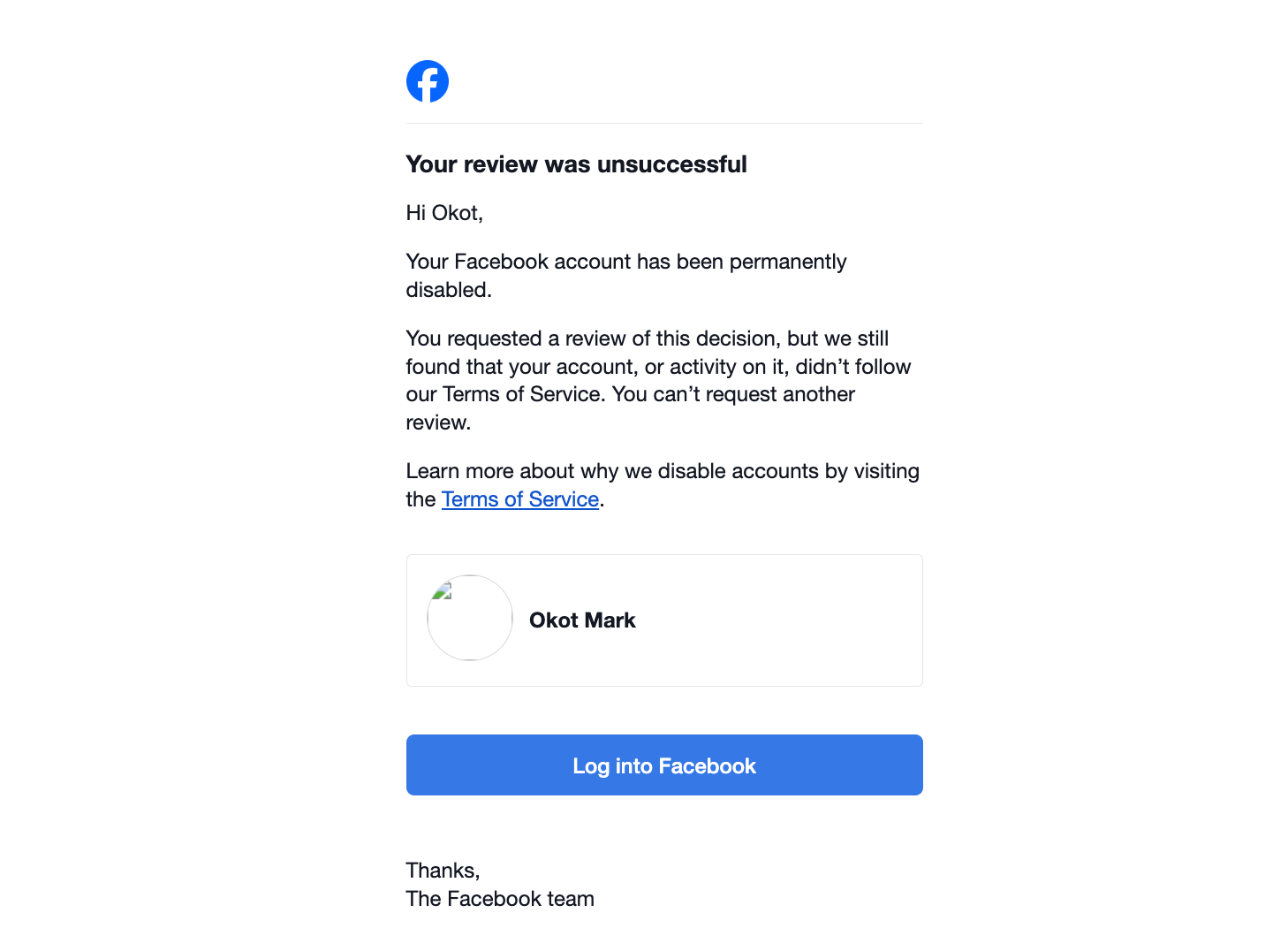
I arrived home that evening to find an email from Meta notifying me that my Facebook account had been suspended. It urged me to appeal within 180 days, or face permanent deletion. Puzzled but proactive, I submitted my appeal immediately. By the next morning, another email arrived: my account was permanently disabled, and the appeal had been denied. No reasons were provided, just a cold statement that I’d lost access forever.
I rarely posted personal content on Facebook. My account was primarily a gateway to Meta Business Suite, the hub for managing professional pages across Facebook and Instagram. Through it, I controlled a suite of business assets: my own ventures and those of my clients. As the sole full admin, I handled everything from content scheduling to campaigns. Little did I know, this setup was a ticking time bomb.
When you create a page on Facebook or Instagram, linking them via Meta Business Suite creates a unified Business Portfolio. This is the command center for your digital empire. It allows you to manage pages, grant roles to team members, and integrate tools like WhatsApp Business Platform for large-scale operations. Third-party services often require access to this portfolio to function properly.
The problem? Meta’s system ties these portfolios tightly to personal accounts. When my account was banned, I was automatically removed as the full admin, leaving the role vacant. Suddenly, Meta held sole control over my pages and client portfolios. Attempts to log in via Instagram offered limited access, but I couldn’t remove the banned account or promote another user to full control.
Desperate for resolution, I reached out to Meta’s support; only to discover it’s virtually nonexistent for issues like this. Human responses (when they came) were unhelpful. Many online forums suggested subscribing to Meta Verified on Instagram as a workaround, but that didn’t resolve the core issue. I even filed countless “Admin Dispute Claims,” providing every requested document: business registrations, IDs, proof of ownership. Their response? They couldn’t manually promote another admin because the original account was banned. The exact reason I was disputing in the first place!
This circular logic is infuriating. Online communities are rife with similar complaints: Meta’s automated bots flag and delete accounts without transparency or appeal processes that actually work. Some advise assembling a legal team to confront Meta directly, arguing that they’re effectively holding your digital assets hostage. In my case, that’s exactly what happened. I lost control of my music page, clothing brand, design firm, and client accounts overnight, all without a single violation explained.
As a digital communicator, this ban doesn’t just erase a social profile; it obliterates gigs and revenue streams. Clients rely on seamless access to their ad data, analytics, and campaigns. Without it, projects stalled, trust eroded, and opportunities vanished. Researching further, I found this is a widespread epidemic. Countless marketers, creators, and small business owners have shared horror stories on forums like Reddit and X (formerly Twitter). Meta’s opaque algorithms and lack of accountability have led to lost livelihoods, with users begging for reasons that never come.
The stakes are high in an industry where platforms like Meta control the gates to billions of users. One unjust ban, and your life’s work evaporates. It’s not just about losing followers; it’s about Meta seizing ownership of your Business Portfolio and refusing to relinquish it.
If you’re in digital marketing or communications, don’t wait for the dreaded email. Here’s how to safeguard your assets:
- Distribute Admin Roles Wisely: Grant full admin rights in your Business Portfolio to a few trusted colleagues or partners. This creates redundancy, so a single ban doesn’t lock everyone out.
- Create Backups: Set up duplicate pages or alternative accounts as contingencies. Mirror key content and audiences where possible.
- Disassociate Personal and Business Accounts: Where feasible, unlink your personal Facebook account from business pages. Use dedicated business profiles to minimize risk.
- Diversify Platforms: Don’t put all your eggs in Meta’s basket. Build presence on alternatives like LinkedIn, TikTok, or X to mitigate total loss.
- Prepare for the Worst: Document everything, screenshots of access, business proofs and consider legal consultation early. It is said that Meta responds better to formal demands than support tickets.
Meta’s ecosystem is powerful, but it’s also precarious. One day, without warning, they could claim full ownership of your digital portfolio and refuse to give it back. My experience proves it. Don’t let it happen to you, act now to secure your future in this volatile online world.


Uganda Launches Evacuation of Nationals from South Africa Amid Rising Xenophobic Violence

Otto von Bismarck, The Marketing Genius Who Built an Empire and Hastened His Own Downfall

Bank of Uganda Sets A Bold Push Toward Digital Payments With New Cash Withdrawal Limits.


-

 Entertainment2 years ago
Museveni’s 2025 Copyright for Musicians breakdown
-

 Sports1 year ago
The Transformative Impact of World Cup Qualification for Uganda
-

 Business2 years ago
The 9 worst mistakes you can ever make at work
-

 Policies2 years ago
Breakdown of the Uganda Police Force Annual Crime Report 2024
-

 Business2 years ago
Uganda’s Ministry of Finance projects significant growth opportunities in 2025
-

 Entertainment2 years ago
Uganda Cracksdown On Vulgar Music Content | Gloria Bugie, Shakira Shakira, targeted
-

 Policies2 years ago
Is Uganda’s Shs10m Fine the WORST Thing for Cohabiting Couples?
-

 Health2 years ago
Breaking down the Malaria Vaccine Rollout in Uganda