
Blog
Balancing Growth and Stability in 2025
The Uganda Economic Update report provides a broader perspective on this landscape. It estimates that growth for FY23/24 will be 6%, up from 5.3%, driven by a rebound in agriculture, oil-related construction, and a services sector buoyed by telecommunications and trade.


Uganda’s financial landscape is a vibrant yet complex mix of fintech innovation, cautious monetary policy, and ambitious economic goals. From the bustling markets of Kampala to the rural fields in the north, the nation finds itself at a pivotal moment poised for growth while navigating challenges that test its resilience.
At the forefront of this financial evolution is the fintech sector, driven by the remarkable success of mobile money. Platforms like MTN Mobile Money and Airtel Money have transformed basic phones into powerful financial tools, reaching millions who were previously excluded from traditional banking services. By 2025, mobile money transactions have outpaced the formal economy, accounting for over 90% of GDP. This phenomenon extends beyond mere cash transfers; partnerships with banks have resulted in micro-loans and digital savings accounts, empowering individuals such as a boda boda driver in Kampala to repair his motorcycle or a savings group in Masaka to secure its funds. Additionally, new fintech players are emerging, offering asset financing and digital platforms for community savings, creating a diverse and thriving ecosystem. This boom, celebrated widely on March 6, reflects a surge in digital transactions fueled by expanding mobile networks and a push towards digitalization that is reshaping how Ugandans live and work.
However, this fintech flourish unfolds against a backdrop of stringent monetary policy. The Bank of Uganda has maintained its key lending rate at 10% since February 6, 2025, a decision made with caution in light of global uncertainties such as volatile oil prices and supply chain disruptions. The Uganda Economic Update report characterizes 2023/24 as a challenging year for businesses, with tight policy driving up borrowing costs and limiting access to credit. Core inflation, which reached 4.2% in January 2025 and is projected to remain between 4% and 5% this year, reinforces this cautious approach keeping prices in check but leaving businesses struggling with high loan costs. As of March 6, no changes to the interest rate have been reported, suggesting a continuation of this stability. While it offers predictability, it also provides little relief. Businesses ranging from small traders to manufacturers face a difficult choice: reduce operations or pass increased costs onto consumers, a trend evidenced by six consecutive months of rising output charges.
The Uganda Economic Update report provides a broader perspective on this landscape. It estimates that growth for FY23/24 will be 6%, up from 5.3%, driven by a rebound in agriculture, oil-related construction, and a services sector buoyed by telecommunications and trade. Industry and services lead the way, contributing 25% and 44% to GDP, respectively, while agriculture despite employing the majority of Ugandans continues to contend with climate-related challenges. Looking ahead, growth is projected at 6.2% for FY24/25, potentially reaching 7% as oil production begins later in the year. This aligns with an ambitious vision to achieve a $59.3 billion economy by June 2025, as targeted earlier this year. Yet, risks remain: high debt levels, weak domestic revenue, and poverty still affecting 40% of the population pose threats to this trajectory.
The financial system has shown resilience. A cybersecurity breach in February 2025 resulted in the theft of $21 million from the central bank, revealing vulnerabilities, yet fintech’s decentralized structure ensured that mobile money transactions continued uninterrupted. Currently, no major financial crises dominate the news cycle, although the repercussions of that breach may still be felt. At the same time, the private sector is showing signs of recovery, with improved business conditions reported on March 6, a potential nod to the buoyancy of fintech and the stability of monetary policy.
Uganda’s financial landscape in 2025 presents a study in contrasts. Mobile money and fintech innovations are rewriting the rules, driving financial inclusion and economic activity at an unprecedented pace. Nonetheless, tight monetary policy and structural challenges such as gaps in rural connectivity and high borrowing costs temper this progress, requiring resilience from both businesses and citizens. With oil production on the horizon and a youthful population eager for opportunities, the nation stands at a crossroads between promise and peril. As March 6 unfolds, Uganda is a country in motion, stable and growing, yet ever vigilant of the challenges that could tip the balance.


Politics
Uganda Launches Evacuation of Nationals from South Africa Amid Rising Xenophobic Violence
Following rising xenophobic attacks, Uganda has launched an urgent evacuation of its nationals from South Africa. 746 citizens have already registered as President Museveni orders special flights home.

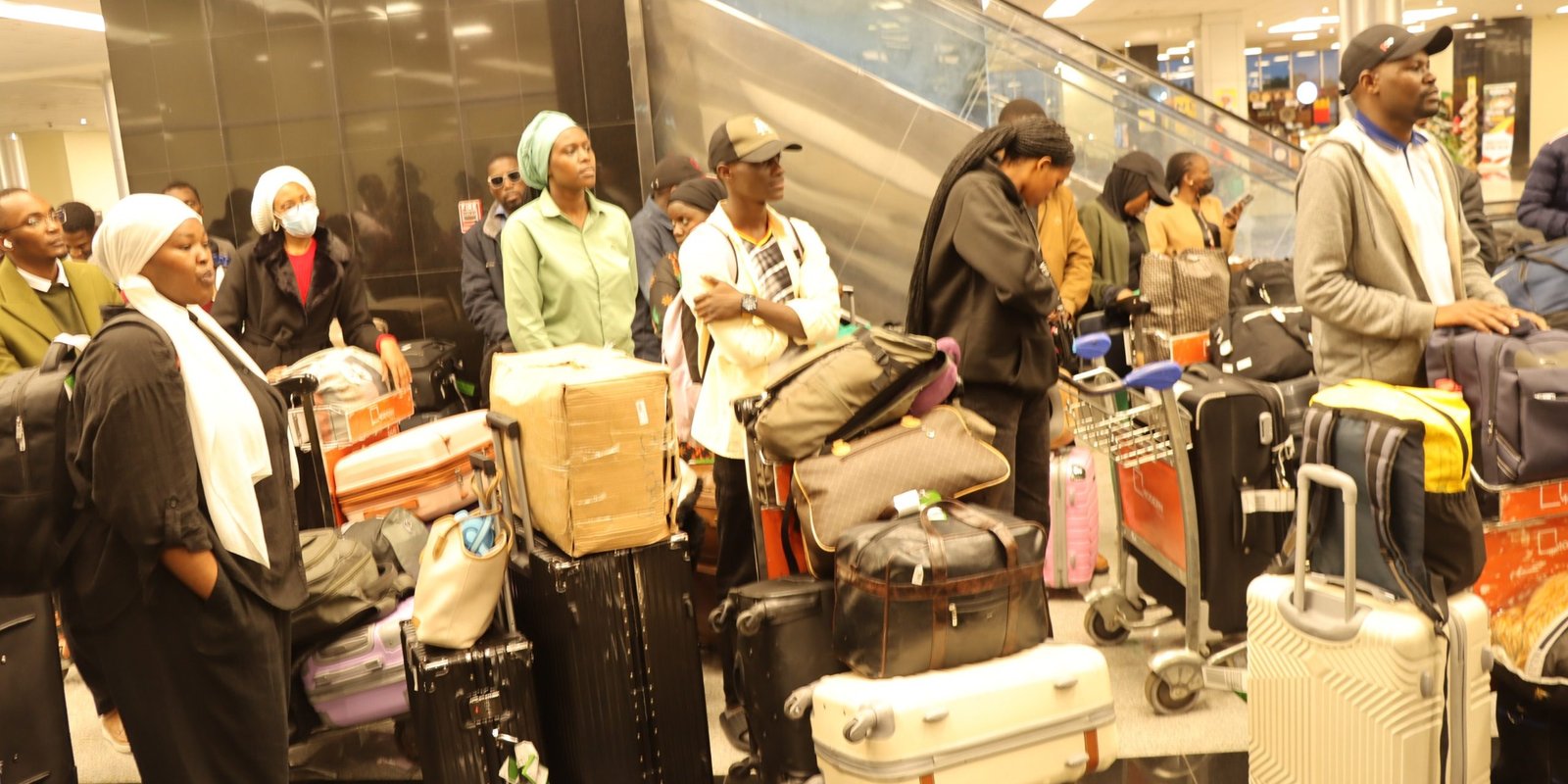
President Yoweri Kaguta Museveni has directed the Ministry of Foreign Affairs, in coordination with several other government bodies, to finalize and implement the evacuation operation, which is expected to begin in the coming days.
According to a press statement issued by the Ministry today, 746 Ugandans have already voluntarily registered for assisted evacuation due to serious safety and security concerns. Many more are expected to register, while numerous others have already left South Africa independently after vigilante groups reportedly issued a deadline of 30 June 2026.
The evacuation plan includes registering affected nationals across South African provinces, transferring them to safe assembly points, issuing emergency travel documents where needed, and coordinating with immigration authorities. In partnership with the Ministry of Works and Transport, the government has arranged for Uganda Airlines to operate special charter flights, which will be fully funded by the Ugandan government.
The statement also noted that other African countries have similarly evacuated their nationals from South Africa in response to the current situation. Uganda continues to engage directly with the South African government to ensure the safety of the remaining Ugandan nationals.
In a somber development, the government confirmed that one Ugandan national was killed in an attack in KwaZulu-Natal Province. Preparations are underway to repatriate the body to Uganda, and the Acting Minister of Foreign Affairs has extended heartfelt condolences to the bereaved family.
Hon. Haruna Kyeyune Kasolo, Acting Minister of Foreign Affairs, signed the official statement, which emphasized the government’s commitment to the safety of its citizens abroad.
This marks a significant repatriation effort amid ongoing tensions in South Africa, where foreign nationals have faced repeated waves of xenophobic attacks in recent years.

Otto von Bismarck, known as the Iron Chancellor, was one of the most effective political marketers in modern history. Long before the invention of public relations firms, spin doctors, or social media, he demonstrated a masterful command of narrative control, strategic communication, and personal branding. Through calculated leaks, emotional appeals to nationalism, and a carefully crafted public image, Bismarck unified Germany in 1871. However, the very marketing strategies that propelled him to greatness also played a subtle but significant role in his dramatic fall from power in 1890.
Bismarck operated in an era of emerging mass media and rising nationalism. He understood that wars and treaties alone would not suffice; he needed to shape public perception. His most famous act of media manipulation occurred in 1870 with the Ems Dispatch. After a relatively polite diplomatic exchange between King Wilhelm I of Prussia and the French ambassador, Bismarck edited the telegram to make it sound deliberately insulting to both sides. He then leaked this provocative version to the press, knowing it would act like a “red rag” to the French bull. The result was exactly as he intended: France declared war, Prussia won decisively, and the victory paved the way for the proclamation of the German Empire at Versailles.
Beyond this masterstroke, Bismarck built a powerful personal brand. He presented himself as the gruff, no-nonsense Junker aristocrat in military uniform with a cigar in hand, iron will intact. Portraits, statues, and favorable newspaper coverage reinforced the image of a larger-than-life unifier who stood above petty politics. This “Iron Chancellor” persona helped him maintain support among German nationalists, even when his policies such as the Kulturkampf against Catholics or the anti-socialist laws generated opposition.
He also proved adept at narrative framing. When facing domestic rivals, Bismarck positioned the Prussian-led state as the defender of German unity and stability. He combined repression with innovation, introducing early welfare programs to undercut socialist appeal while portraying himself as a pragmatic protector of the working class. In foreign policy, he carefully painted the new Germany as a “satiated power” that sought peace after unification, all while maintaining a complex web of alliances designed to isolate potential enemies.
For nearly three decades, this combination of realpolitik and sophisticated storytelling kept Bismarck firmly in control. He transformed fragmented German states into a major European power and built a lasting myth around his leadership. However, the same branding genius that contributed to his success ultimately led to his downfall. By making himself the indispensable hero of the Reich, Bismarck created a highly personalized system of governance with few institutional checks. His cult of personality left little room for a smooth transition of power.
When the young and ambitious Kaiser Wilhelm II ascended the throne in 1888, he quickly grew tired of living in the shadow of this towering figure. Wilhelm wanted to rule in his own right and pursue a more assertive “New Course” in foreign and domestic policy. Bismarck’s larger-than-life image, once an asset, became a liability, positioning him as a rival rather than a loyal servant. After months of growing tension over policy direction and ministerial authority, Wilhelm forced Bismarck’s resignation in March 1890. The man who had engineered Germany’s birth was unceremoniously pushed aside by the very monarch he had helped elevate.
In the years that followed, Bismarck leaned even harder into his public persona through memoirs and press interviews, reinforcing the narrative of the wise elder statesman betrayed by youthful impulsiveness. This final act of personal branding helped shape historical memory many later blamed Wilhelm II’s decisions for Germany’s 20th-century tragedies but it offered little consolation to the chancellor who had lost real power.
Bismarck’s story offers a timeless lesson in leadership and communication. Exceptional marketing and branding can achieve extraordinary results, forging nations and reshaping history. Yet when that branding becomes too closely tied to one individual and when institutions remain weak, it can lead to isolation and removal. The tools that build empires can also limit their builders’ longevity.
In today’s world of personal brands, thought leadership, and digital narratives, Bismarck remains a fascinating case study: proof that the art of influence is powerful, double-edged, and as relevant now as it was in the 19th century.
Business
Bank of Uganda Sets A Bold Push Toward Digital Payments With New Cash Withdrawal Limits.
The Bank of Uganda has introduced new over-the-counter cash withdrawal limits effective 1 January 2027, capping individuals at UGX 50 million daily and corporates at UGX 250 million. The policy aims to accelerate digital payments while sparking debate on its impact on cash-reliant sectors.

The Bank of Uganda (BOU) has announced significant changes to cash withdrawal limits that will take effect on January 1, 2027. Under the new policy, individual customers will be limited to withdrawing a maximum of UGX 50 million per day and UGX 500 million per week from their accounts at commercial banks. Corporate accounts will have higher limits, allowing withdrawals of up to UGX 250 million daily and UGX 2.5 billion weekly. These limits apply only to over-the-counter cash transactions and do not affect electronic transfers, such as RTGS, EFTs, mobile money, or other digital payment channels.
This move represents one of the most direct interventions by Uganda’s central bank to accelerate the shift from cash to digital financial services. For years, BOU has encouraged electronic payments through various initiatives, highlighting their benefits, including faster transaction speeds, greater transparency, reduced costs related to printing and handling physical currency, and improved security. The new limits build on the observed growth in digital adoption, as many Ugandans and businesses already prefer mobile money, internet banking, and card payments for both everyday and larger transactions.
The policy also allows for flexibility in exceptional cases. Financial institutions under supervision can request exemptions for clients in cash-intensive sectors such as agriculture, fuel distribution, or large-scale trading after conducting proper risk assessments and obtaining BOU approval. This provision acknowledges that not every economic activity can transition overnight to fully digital methods, particularly in rural areas or sectors dominated by cash due to infrastructure limitations or client preferences.
Uganda’s economy has experienced rapid digital transformation. Mobile money transactions have surged in both volume and value, while platforms like the Uganda National Interbank Settlement System continue to mature. BOU officials argue that an excessive reliance on cash imposes hidden costs on the financial system, including risks of theft, money laundering, and inefficiencies in supply chains. By capping large cash withdrawals, the central bank aims to encourage both individuals and businesses to adopt safer, traceable digital alternatives that also generate valuable data for credit scoring and economic planning.
For the average salary earner or small business owner, daily life may not change dramatically, as most transactions fall well below the new thresholds. However, the real impact will likely be felt by high-net-worth individuals, large corporations, and operators in sectors that frequently handle substantial cash volumes. These groups will need to plan ahead, diversify their payment methods, and perhaps strengthen their relationships with banks to secure necessary exemptions.
Banks themselves will also need to adapt. Customer service teams will require training on the new rules, while relationship managers will play a greater role in advising clients on digital alternatives. Over time, this shift could drive innovation in financial products tailored to a less cash-dependent economy.
The success of this policy will depend on effective execution and complementary measures. If digital infrastructure reliably expands into rural districts, transaction fees decrease, and public trust in electronic systems continues to grow, Uganda could emerge as a regional leader in cashless financial services. Ongoing challenges regarding cybersecurity, digital literacy, and last-mile connectivity will need attention.
As the January 1, 2027 deadline approaches, businesses and individuals would be wise to review their cash handling practices and explore digital tools that align with this new reality. The Bank of Uganda’s message is clear: the future of money in Uganda is increasingly digital, and the transition is not just encouraged but actively facilitated from the top.


Uganda Launches Evacuation of Nationals from South Africa Amid Rising Xenophobic Violence

Otto von Bismarck, The Marketing Genius Who Built an Empire and Hastened His Own Downfall

Bank of Uganda Sets A Bold Push Toward Digital Payments With New Cash Withdrawal Limits.


-

 Entertainment2 years ago
Museveni’s 2025 Copyright for Musicians breakdown
-

 Sports1 year ago
The Transformative Impact of World Cup Qualification for Uganda
-

 Business2 years ago
The 9 worst mistakes you can ever make at work
-

 Policies2 years ago
Breakdown of the Uganda Police Force Annual Crime Report 2024
-

 Business2 years ago
Uganda’s Ministry of Finance projects significant growth opportunities in 2025
-

 Entertainment2 years ago
Uganda Cracksdown On Vulgar Music Content | Gloria Bugie, Shakira Shakira, targeted
-

 Policies2 years ago
Is Uganda’s Shs10m Fine the WORST Thing for Cohabiting Couples?
-

 Health2 years ago
Breaking down the Malaria Vaccine Rollout in Uganda