
Blog
Uganda Tourism Board Intensifies Crackdown on Unlicensed Accommodation Facilities
Starting May 6, 2025, UTB teams are revisiting these facilities to confirm adherence to licensing standards.


The Uganda Tourism Board (UTB) has heightened its efforts to enforce compliance with licensing requirements for tourist accommodation facilities. Inspections resumed today across the Kampala Metropolitan Area following a six-month grace period granted to facility owners after an initial announcement on November 18, 2024. This warning indicated potential closures for unlicensed operations. Non-compliant facilities now face immediate closure, demonstrating UTB’s commitment to elevating standards within Uganda’s tourism sector.
This latest phase of enforcement follows inspections conducted in late 2024, during which UTB, in collaboration with the Uganda Police, targeted unlicensed accommodation facilities across Kampala’s 19 policing divisions, including Kawempe, Kamwokya, Rubaga, Wandegeya, Nansana, and the Central Business District. At that time, fewer than 200 of Uganda’s estimated 4,000 accommodation facilities held licenses. Consequently, UTB issued compliance notices and allowed owners time to fulfill the requirements outlined in the Uganda Tourism Act of 2008.
Starting May 6, 2025, UTB teams are revisiting these facilities to confirm adherence to licensing standards. “Non-compliant facilities will be closed,” UTB declared in a public notice, emphasizing that quality service at hotels, lodges, guesthouses, and other accommodations directly affects the experiences of tourists visiting Uganda. The board’s actions reaffirm its mission to ensure world-class standards under the “Explore Uganda – The Pearl of Africa” brand.
The Uganda Tourism Act mandates that all tourist accommodation facilities, ranging from hotels and serviced apartments to hostels and tented camps, obtain a valid tourism operating license. To qualify, owners must submit the following documents: Certificate of Incorporation, TIN Registration Certificate, Valid Operating Certificates, Approved Building Plan or Occupation Permit.
Registration is facilitated through UTB’s Quality Assurance System, and payments are processed via the Uganda Revenue Authority. The registration and inspection fee is 100,000 Ugandan Shillings, with an annual licensing fee of 200,000 Shillings, though these fees are currently under review.
The enforcement campaign has encountered challenges. In November 2024, some hotel owners criticized UTB’s approach, citing a lack of adequate prior consultation and awareness. Some critics, argued that the crackdown could negatively impact the sector and urged UTB to focus on awareness rather than punitive measures. In response, UTB spokesperson Gesa John Simplicious defended the initiative, stating that extensive stakeholder engagement had taken place and that enforcing standards is a legal obligation. The extent of non-compliance—over 95% of facilities were unlicensed in 2024, highlights gaps in awareness and instances of deliberate non-compliance. To address this, UTB has combined enforcement efforts with sensitization campaigns, offering a 48-hour grace period for unlicensed but compliant facilities to apply for licenses, and a 24-hour period for non-compliant facilities to relocate guests to licensed alternatives.
Tourism serves as a cornerstone of Uganda’s economy, significantly contributing to foreign exchange earnings. Poor service standards at unlicensed facilities could tarnish the country’s global reputation, making UTB’s crackdown a vital step toward sustainable growth. The initiative aligns with broader efforts, including hotel grading, classification, and partnerships with global brands like Emirates Airline and Absa Bank Uganda for events such as the KH3-Hills Marathon.
By enforcing licensing, UTB aims to create a conducive environment for stakeholders while ensuring tourists enjoy safe, hygienic, and high-quality accommodations. This phased enforcement, beginning in Kampala and set to expand nationwide, reflects a strategic approach to overcoming logistical challenges posed by the scale of the sector.
UTB urges accommodation owners to take immediate action to avoid closure: Register promptly through the UTB Quality Assurance System, Submit all required documentation, Ensure facilities meet minimum standards for safety, hygiene, and structural integrity, Seek assistance at +256-414-342-196/7 or qualityassurance@utb.go.ug.
As UTB continues its inspections, the tourism sector is at a pivotal juncture. The board’s commitment to enhancing hospitality standards is evident, but its success will depend on striking a balance between enforcement and stakeholder cooperation. For now, facility owners are on notice: comply or face closure.
For more information, visit www.utb.go.ug or www.qasystem.utb.go.ug. Uganda’s tourism industry is poised for transformation, and UTB’s actions signal a bold step toward a brighter, more competitive future.
Contact: Uganda Tourism Board, +256-414-342-196/7, qualityassurance@utb.go.ug

Politics
Uganda Launches Evacuation of Nationals from South Africa Amid Rising Xenophobic Violence
Following rising xenophobic attacks, Uganda has launched an urgent evacuation of its nationals from South Africa. 746 citizens have already registered as President Museveni orders special flights home.
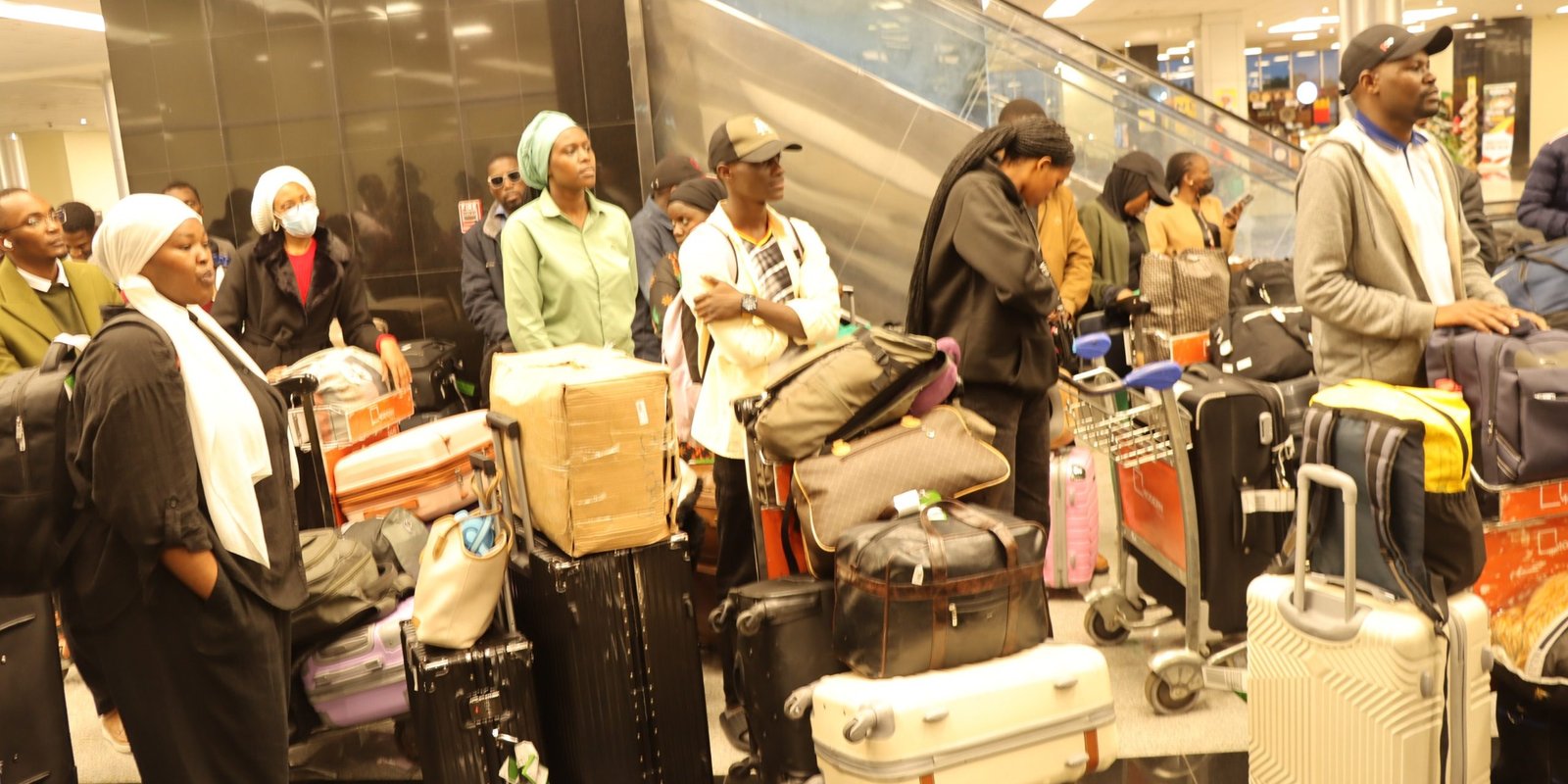
President Yoweri Kaguta Museveni has directed the Ministry of Foreign Affairs, in coordination with several other government bodies, to finalize and implement the evacuation operation, which is expected to begin in the coming days.
According to a press statement issued by the Ministry today, 746 Ugandans have already voluntarily registered for assisted evacuation due to serious safety and security concerns. Many more are expected to register, while numerous others have already left South Africa independently after vigilante groups reportedly issued a deadline of 30 June 2026.
The evacuation plan includes registering affected nationals across South African provinces, transferring them to safe assembly points, issuing emergency travel documents where needed, and coordinating with immigration authorities. In partnership with the Ministry of Works and Transport, the government has arranged for Uganda Airlines to operate special charter flights, which will be fully funded by the Ugandan government.
The statement also noted that other African countries have similarly evacuated their nationals from South Africa in response to the current situation. Uganda continues to engage directly with the South African government to ensure the safety of the remaining Ugandan nationals.
In a somber development, the government confirmed that one Ugandan national was killed in an attack in KwaZulu-Natal Province. Preparations are underway to repatriate the body to Uganda, and the Acting Minister of Foreign Affairs has extended heartfelt condolences to the bereaved family.
Hon. Haruna Kyeyune Kasolo, Acting Minister of Foreign Affairs, signed the official statement, which emphasized the government’s commitment to the safety of its citizens abroad.
This marks a significant repatriation effort amid ongoing tensions in South Africa, where foreign nationals have faced repeated waves of xenophobic attacks in recent years.

Otto von Bismarck, known as the Iron Chancellor, was one of the most effective political marketers in modern history. Long before the invention of public relations firms, spin doctors, or social media, he demonstrated a masterful command of narrative control, strategic communication, and personal branding. Through calculated leaks, emotional appeals to nationalism, and a carefully crafted public image, Bismarck unified Germany in 1871. However, the very marketing strategies that propelled him to greatness also played a subtle but significant role in his dramatic fall from power in 1890.
Bismarck operated in an era of emerging mass media and rising nationalism. He understood that wars and treaties alone would not suffice; he needed to shape public perception. His most famous act of media manipulation occurred in 1870 with the Ems Dispatch. After a relatively polite diplomatic exchange between King Wilhelm I of Prussia and the French ambassador, Bismarck edited the telegram to make it sound deliberately insulting to both sides. He then leaked this provocative version to the press, knowing it would act like a “red rag” to the French bull. The result was exactly as he intended: France declared war, Prussia won decisively, and the victory paved the way for the proclamation of the German Empire at Versailles.
Beyond this masterstroke, Bismarck built a powerful personal brand. He presented himself as the gruff, no-nonsense Junker aristocrat in military uniform with a cigar in hand, iron will intact. Portraits, statues, and favorable newspaper coverage reinforced the image of a larger-than-life unifier who stood above petty politics. This “Iron Chancellor” persona helped him maintain support among German nationalists, even when his policies such as the Kulturkampf against Catholics or the anti-socialist laws generated opposition.
He also proved adept at narrative framing. When facing domestic rivals, Bismarck positioned the Prussian-led state as the defender of German unity and stability. He combined repression with innovation, introducing early welfare programs to undercut socialist appeal while portraying himself as a pragmatic protector of the working class. In foreign policy, he carefully painted the new Germany as a “satiated power” that sought peace after unification, all while maintaining a complex web of alliances designed to isolate potential enemies.
For nearly three decades, this combination of realpolitik and sophisticated storytelling kept Bismarck firmly in control. He transformed fragmented German states into a major European power and built a lasting myth around his leadership. However, the same branding genius that contributed to his success ultimately led to his downfall. By making himself the indispensable hero of the Reich, Bismarck created a highly personalized system of governance with few institutional checks. His cult of personality left little room for a smooth transition of power.
When the young and ambitious Kaiser Wilhelm II ascended the throne in 1888, he quickly grew tired of living in the shadow of this towering figure. Wilhelm wanted to rule in his own right and pursue a more assertive “New Course” in foreign and domestic policy. Bismarck’s larger-than-life image, once an asset, became a liability, positioning him as a rival rather than a loyal servant. After months of growing tension over policy direction and ministerial authority, Wilhelm forced Bismarck’s resignation in March 1890. The man who had engineered Germany’s birth was unceremoniously pushed aside by the very monarch he had helped elevate.
In the years that followed, Bismarck leaned even harder into his public persona through memoirs and press interviews, reinforcing the narrative of the wise elder statesman betrayed by youthful impulsiveness. This final act of personal branding helped shape historical memory many later blamed Wilhelm II’s decisions for Germany’s 20th-century tragedies but it offered little consolation to the chancellor who had lost real power.
Bismarck’s story offers a timeless lesson in leadership and communication. Exceptional marketing and branding can achieve extraordinary results, forging nations and reshaping history. Yet when that branding becomes too closely tied to one individual and when institutions remain weak, it can lead to isolation and removal. The tools that build empires can also limit their builders’ longevity.
In today’s world of personal brands, thought leadership, and digital narratives, Bismarck remains a fascinating case study: proof that the art of influence is powerful, double-edged, and as relevant now as it was in the 19th century.
Business
Bank of Uganda Sets A Bold Push Toward Digital Payments With New Cash Withdrawal Limits.
The Bank of Uganda has introduced new over-the-counter cash withdrawal limits effective 1 January 2027, capping individuals at UGX 50 million daily and corporates at UGX 250 million. The policy aims to accelerate digital payments while sparking debate on its impact on cash-reliant sectors.

The Bank of Uganda (BOU) has announced significant changes to cash withdrawal limits that will take effect on January 1, 2027. Under the new policy, individual customers will be limited to withdrawing a maximum of UGX 50 million per day and UGX 500 million per week from their accounts at commercial banks. Corporate accounts will have higher limits, allowing withdrawals of up to UGX 250 million daily and UGX 2.5 billion weekly. These limits apply only to over-the-counter cash transactions and do not affect electronic transfers, such as RTGS, EFTs, mobile money, or other digital payment channels.
This move represents one of the most direct interventions by Uganda’s central bank to accelerate the shift from cash to digital financial services. For years, BOU has encouraged electronic payments through various initiatives, highlighting their benefits, including faster transaction speeds, greater transparency, reduced costs related to printing and handling physical currency, and improved security. The new limits build on the observed growth in digital adoption, as many Ugandans and businesses already prefer mobile money, internet banking, and card payments for both everyday and larger transactions.
The policy also allows for flexibility in exceptional cases. Financial institutions under supervision can request exemptions for clients in cash-intensive sectors such as agriculture, fuel distribution, or large-scale trading after conducting proper risk assessments and obtaining BOU approval. This provision acknowledges that not every economic activity can transition overnight to fully digital methods, particularly in rural areas or sectors dominated by cash due to infrastructure limitations or client preferences.
Uganda’s economy has experienced rapid digital transformation. Mobile money transactions have surged in both volume and value, while platforms like the Uganda National Interbank Settlement System continue to mature. BOU officials argue that an excessive reliance on cash imposes hidden costs on the financial system, including risks of theft, money laundering, and inefficiencies in supply chains. By capping large cash withdrawals, the central bank aims to encourage both individuals and businesses to adopt safer, traceable digital alternatives that also generate valuable data for credit scoring and economic planning.
For the average salary earner or small business owner, daily life may not change dramatically, as most transactions fall well below the new thresholds. However, the real impact will likely be felt by high-net-worth individuals, large corporations, and operators in sectors that frequently handle substantial cash volumes. These groups will need to plan ahead, diversify their payment methods, and perhaps strengthen their relationships with banks to secure necessary exemptions.
Banks themselves will also need to adapt. Customer service teams will require training on the new rules, while relationship managers will play a greater role in advising clients on digital alternatives. Over time, this shift could drive innovation in financial products tailored to a less cash-dependent economy.
The success of this policy will depend on effective execution and complementary measures. If digital infrastructure reliably expands into rural districts, transaction fees decrease, and public trust in electronic systems continues to grow, Uganda could emerge as a regional leader in cashless financial services. Ongoing challenges regarding cybersecurity, digital literacy, and last-mile connectivity will need attention.
As the January 1, 2027 deadline approaches, businesses and individuals would be wise to review their cash handling practices and explore digital tools that align with this new reality. The Bank of Uganda’s message is clear: the future of money in Uganda is increasingly digital, and the transition is not just encouraged but actively facilitated from the top.


Uganda Launches Evacuation of Nationals from South Africa Amid Rising Xenophobic Violence

Otto von Bismarck, The Marketing Genius Who Built an Empire and Hastened His Own Downfall

Bank of Uganda Sets A Bold Push Toward Digital Payments With New Cash Withdrawal Limits.


-

 Entertainment2 years ago
Museveni’s 2025 Copyright for Musicians breakdown
-

 Sports1 year ago
The Transformative Impact of World Cup Qualification for Uganda
-

 Business2 years ago
The 9 worst mistakes you can ever make at work
-

 Policies2 years ago
Breakdown of the Uganda Police Force Annual Crime Report 2024
-

 Business2 years ago
Uganda’s Ministry of Finance projects significant growth opportunities in 2025
-

 Entertainment2 years ago
Uganda Cracksdown On Vulgar Music Content | Gloria Bugie, Shakira Shakira, targeted
-

 Policies2 years ago
Is Uganda’s Shs10m Fine the WORST Thing for Cohabiting Couples?
-

 Health2 years ago
Breaking down the Malaria Vaccine Rollout in Uganda