
Tech
Native Instruments Enters Pre-Insolvency Restructuring: An Analysis Based on Official Documents
On January 26, 2026, Native Instruments GmbH and Native Instruments Group GmbH filed applications at the Charlottenburg Local Court in Berlin to open pre-insolvency proceedings under German law. The court appointed Prof. Dr. Torsten Martini as provisional insolvency administrator for both entities and issued protective orders prohibiting compulsory enforcement measures (except on immovable assets) and requiring any dispositions by the debtors to receive the administrator’s consent.

Native Instruments, a prominent player in the music production industry, has initiated pre-insolvency proceedings in Germany, as evidenced by court orders and a public statement from its CEO. This development follows closely on the heels of a major corporate transaction approved by the European Commission. Drawing exclusively from the provided regulatory decision, court filings, and CEO’s statement, we examine the timeline, legal actions, and stated implications for the company. The proceedings involve Native Instruments GmbH and Native Instruments Group GmbH, with references to additional holding entities, highlighting a structured approach to addressing financial challenges while maintaining operations.
On December 4, 2025, the European Commission issued a decision under the EU Merger Regulation (Council Regulation (EC) No 139/2004) regarding Case M.12232 – Bridgepoint / Bain Capital Credit / Native Instruments Group. The notification for this proposed concentration was received on November 11, 2025.
In this transaction, Bridgepoint Group Holdings Limited (based in London, United Kingdom, and ultimately controlled by Bridgepoint Group plc), a private market growth investor specializing in private equity, infrastructure, and private credit, and Bain Capital Credit L.P. (based in Boston, United States, part of the Bain Capital Credit Group), a credit specialist investing in leveraged loans, high-yield bonds, structured products, private middle market loans, and other credit-related strategies, acquired joint control over the whole of Native Instruments Group GmbH (based in Germany) through the purchase of shares.
Native Instruments Group is described in the decision as an entity that develops and supplies software and hardware tools for music production. The Commission concluded that the operation falls within the scope of the Merger Regulation and qualifies for simplified treatment under paragraph 5(c) of the Commission Notice on a simplified treatment for certain concentrations. Consequently, the Commission decided not to oppose the transaction and declared it compatible with the internal market and the EEA Agreement, pursuant to Article 6(1)(b) of the Merger Regulation and Article 57 of the EEA Agreement.
This approval marked a significant shift in ownership, positioning Bridgepoint and Bain Capital Credit as joint controllers of Native Instruments Group just weeks before the insolvency-related filings.
Less than two months after the merger approval, on January 26, 2026, applications were filed for the opening of insolvency proceedings over the assets of two key entities: Native Instruments GmbH and Native Instruments Group GmbH. These filings were processed at the Charlottenburg Local Court in Berlin, under file numbers 3612 IN 602/26 and 3612 IN 604/26, respectively.
Native Instruments GmbH (Case 3612 IN 602/26)
This entity, located at Schlesische Straße 29–30, 10997 Berlin, and represented by managing director Bernhard Schütze, is registered at the Charlottenburg Local Court under Commercial Register HRB 72458. Its business purpose is the development, marketing, and distribution of software, hardware, content, and services in the fields of music and audio technology.
The court order, issued at 5:15 p.m. on January 26, 2026, invokes Sections 21 and 22 of the German Insolvency Code (InsO) to prevent detrimental changes to the debtor’s financial situation until a decision on the application is made. Key provisions include:
- Prohibition on Enforcement Measures: Compulsory enforcement actions, including attachments or preliminary injunctions against the debtor, are prohibited (except for immovable assets). Any ongoing measures are provisionally suspended, as per § 21 para. 2 no. 3 InsO.
- Appointment of Provisional Insolvency Administrator: Mr. Attorney-at-Law Prof. Dr. Torsten Martini, based at Kantstraße 164, 10623 Berlin, is appointed. The administrator’s role is to secure and preserve the debtor’s assets through supervision and to examine whether the assets will cover the costs of the proceedings. The administrator is not the general representative of the debtor.
- Restrictions on Dispositions: Any dispositions by the debtor over assets of the estate are effective only with the administrator’s consent.
- Authorizations: The administrator may establish a special account for the future insolvency estate, collect bank balances and claims, and receive incoming funds. Credit institutions must provide information to the administrator.
- Payment Instructions: Third-party debtors are prohibited from paying the debtor and must pay only to the administrator. The administrator is instructed to serve this order on such debtors and provide proof.
- Access Rights: The administrator can enter business premises, conduct investigations, access books and records, and receive necessary information from the debtor.
Native Instruments Group GmbH (Case 3612 IN 604/26)
This holding entity, also at Schlesische Straße 29–30, 10997 Berlin, represented by the same managing director Bernhard Schütze, is registered under HRB 225514. Its business purpose involves the acquisition, holding, disposal, and management of shareholdings in other companies, as well as holding and managing own assets.
The court order, issued at 6:00 p.m. on January 26, 2026, mirrors the provisions for Native Instruments GmbH exactly, including the same protective measures, appointment of Prof. Dr. Torsten Martini as provisional administrator, and identical restrictions, authorizations, and access rights.
Both orders detail options for immediate appeals, which must be filed within two weeks at the Charlottenburg Local Court. The appeal period starts from pronouncement, service, or effective public announcement on www.insolvenzbekanntmachungen.de. These proceedings are preliminary in nature, providing a protective shield to allow for potential restructuring before full insolvency is opened.
In a direct statement, CEO Nick Williams addressed the developments, emphasizing operational stability. He assured that business continues as usual at Native Instruments, iZotope, Plugin Alliance, and Brainworx. Hardware and software products remain on sale, available for download and activation. Teams are supporting customers normally, continuing product development and launches, and processing Kontakt Player licenses and NKS Partner submissions. Williams confirmed that Native Instruments GmbH has entered a restructuring process in Germany, along with three German non-operating holding companies. Legally, these are applications to open pre-insolvency proceedings. The focus is on securing a healthy, financially sustainable future while providing continuity for creators, customers, and partners. He committed to sharing further updates and reiterated his personal passion as a lifelong musician and 25-year fan of Native Instruments, underscoring the ongoing mission to inspire and enable creators through sound.
Based on the documents, these pre-insolvency proceedings represent a proactive step under German law to safeguard assets and operations during financial assessment. The provisional administrator’s supervision ensures controlled management, with dispositions requiring approval to prevent further deterioration. The close timing after the Bridgepoint and Bain Capital Credit acquisition suggests an evolving corporate strategy, though the exact interplay is not detailed in the provided materials.
The CEO’s emphasis on continuity aligns with the protective intent of the court orders, which do not halt business but impose oversight. Future developments may include a decision on opening full insolvency proceedings, potential appeals, or restructuring outcomes, as governed by the InsO. Stakeholders can expect updates from the company, with legal notices available through public channels like the insolvency announcements website.
This situation highlights Native Instruments’ efforts to navigate challenges while preserving its core activities in music and audio technology, as outlined in the official records.
Currently Native Instrument owns products like: Kontakt 8, Komplete 15 (including Standard, Ultimate, and Collector’s Edition variants), Massive X, Guitar Rig, Reaktor, Traktor Pro, Maschine (including Maschine, Maschine Mikro, and Maschine+), Komplete Audio interfaces, Traktor DJ controllers and systems, Expansions genre-specific packs, Komplete Start free bundle, iZotope audio tools (integrated via acquisition), Plugin Alliance and Brainworx effects plugins, NKS-compatible MIDI controllers and keyboards
Sources: https://ec.europa.eu/competition/mergers/cases1/202550/M_12232_10834693_102_3.pdf

Tech
Potential AI-Driven Job Losses in Uganda
Administrative and customer service roles are particularly vulnerable, as AI-powered chatbots and automation tools streamline tasks such as data entry and customer inquiries.

Artificial intelligence (AI) is transforming economies around the world, and Uganda is no exception. As AI technologies advance, they promise innovation and efficiency but also raise concerns about significant job losses, particularly in sectors that rely heavily on routine tasks. With a young, dynamic workforce and a growing digital landscape, Uganda faces both risks and opportunities. Today, we explore the potential for AI-driven job displacement in Uganda, drawing on global and local research, and offers practical strategies for individuals, businesses, and policymakers to adapt to this transformative wave.
Globally, AI is projected to significantly disrupt labor markets. Studies estimate that 9% to 47% of jobs are at risk of automation, potentially displacing between 300 million and 800 million jobs by 2030. In Uganda, where agriculture, manufacturing, and services dominate the economy, the impact of AI is beginning to emerge, although its adoption remains in the early stages due to infrastructure and cost barriers. Administrative and customer service roles are particularly vulnerable, as AI-powered chatbots and automation tools streamline tasks such as data entry and customer inquiries. For example, Ugandan businesses are increasingly using AI chatbots to manage customer interactions, reducing the need for human agents. A 2023 report highlighted that routine tasks in these sectors are prime targets for automation, threatening jobs in call centers and offices.
In manufacturing and agriculture, AI-driven systems, such as robotic process automation and image recognition, are reducing the need for manual labor. For instance, the National Agricultural Research Organization’s AI-based Cassava Disease Detection System improves crop yields but decreases the reliance on human monitoring. Globally, manufacturing jobs face high automation risks, and Uganda’s growing industrial sector could see similar trends. Entry-level knowledge work, such as data analysis and content creation, is also at risk, with generative AI tools like ChatGPT automating tasks in Uganda’s fintech and service industries, particularly in fraud detection and marketing. A 2025 study noted that while entry-level workers in Uganda’s service sector currently perceive low displacement risks, this could change as AI becomes more accessible.
Precise estimates for Uganda are limited, but global projections provide context. Goldman Sachs’ 2023 report suggested that 300 million jobs worldwide could be lost or degraded, with two-thirds of jobs exposed to some level of automation. In Uganda, where 50% of the population is under 17 and unemployment is driven by skill mismatches, AI could worsen joblessness without proactive measures. The Economic Policy Research Centre warned in 2025 that AI’s efficiency in diagnostics and data processing could outpace human performance, even putting higher-wage roles at risk. Uganda’s unique challenges, including a digital divide where only around 27% of the population has internet access, high AI implementation costs, limited AI literacy, and fragmented regulations like the 2019 Data Protection and Privacy Act, complicate the landscape further.
Despite these risks, AI offers transformative potential for Uganda. The African Union estimates that AI could contribute $1.2 trillion to Africa’s economy by 2030, boosting GDP by 5.6%. In Uganda, AI is already enhancing agriculture, healthcare, and education, creating new roles and improving productivity. Historical examples, such as the introduction of ATMs increasing the demand for bank tellers, suggest that technological advancements often shift rather than eliminate jobs. A 2022 meta-analysis found that AI-driven productivity gains correlate with net job creation, offering hope for Uganda if adaptation is prioritized. By leveraging its youthful population and growing digital initiatives, Uganda can turn the challenges posed by AI into opportunities.
To navigate the impact of artificial intelligence (AI), individuals, businesses, and policymakers in Uganda must take proactive measures tailored to the country’s specific context. For individuals, acquiring skills in AI and digital literacy is essential. Initiatives such as The Makerere University Centre for Artificial Intelligence and Data Science (Mak-CAID), along with online platforms like AI4K12 Uganda, provide accessible training. These skills will prepare workers for roles that complement AI, such as data science and system maintenance, which are in high demand globally. Younger, educated Ugandans are particularly well-positioned to seize these opportunities. Furthermore, emphasizing non-automatable skills such as creativity, critical thinking, and interpersonal communication will help ensure resilience against job displacement by AI. For example, teachers can utilize AI tools like DIKSHA to enhance their lessons while retaining their vital human roles. A 2025 study highlighted how AI can complement educational practices.
Entrepreneurship also offers a promising path, as AI reduces barriers to innovation. An example is Yo! Labs’ AI-powered fertilizer app, which increased crop yields by 20%, demonstrating how individuals can develop solutions that meet local needs and generate new income streams.
Businesses in Uganda can strategically adopt AI to balance efficiency with workforce stability. Implementing AI for tasks like fraud detection in fintech or optimizing supply chains can lead to cost reductions of 15-50%. However, retraining employees for AI-augmented roles is crucial to maintaining morale and competitiveness. Startups like BrailleNet, which uses AI to convert text to braille in real-time, showcase how businesses can create inclusive job opportunities while leveraging technology. Collaborating with universities and the government to train workers, as recommended by a 2023 Business Times report, can help address skill gaps. To overcome cost barriers, companies can utilize open-source AI tools and seek government subsidies, allowing small enterprises to compete and create jobs in AI implementation and maintenance.
Policymakers play a vital role in shaping Uganda’s AI future. Finalizing the recommendations from the National AI Taskforce for a comprehensive AI governance framework, in alignment with the African Union’s AI Policy, will ensure the ethical and equitable adoption of AI. Expanding digital infrastructure, such as through the ICT in Education program, is essential to increase internet access, which currently stands at only 27%. Reforming the education system to include AI literacy from the elementary level is crucial for preparing Uganda’s young population who make 54% of whom are under 17 for an AI-driven economy. Retraining programs, like an expanded Youth Livelihood Program that includes AI-focused modules, can support displaced workers, while unemployment benefits can provide relief during transitions, as suggested by the Urban Institute in 2024. Public awareness campaigns, as recommended by the 2023 Business Times, can build trust and promote AI adoption, reducing resistance among the population.
While AI has the potential to disrupt jobs in Uganda particularly in administrative, manufacturing, and entry-level roles, the country can harness AI’s $1.2 trillion potential for Africa through proactive measures. By investing in skill development, strategically implementing AI in businesses, and establishing robust policies, Uganda can mitigate job losses while promoting growth. The country’s youthful population, increasing literacy rates, and initiatives like the National AI Taskforce provide a solid foundation for this journey. As noted by the Economic Policy Research Centre in 2025, “AI shall not threaten employment if managed properly.” By balancing efficiency with investments in people, Uganda can navigate the challenges posed by AI and emerge as a leader in East Africa’s AI revolution.
Policies
What Ugandans Need to Know About E-Waste
Beyond health concerns, e-waste severely impacts Uganda’s environment.
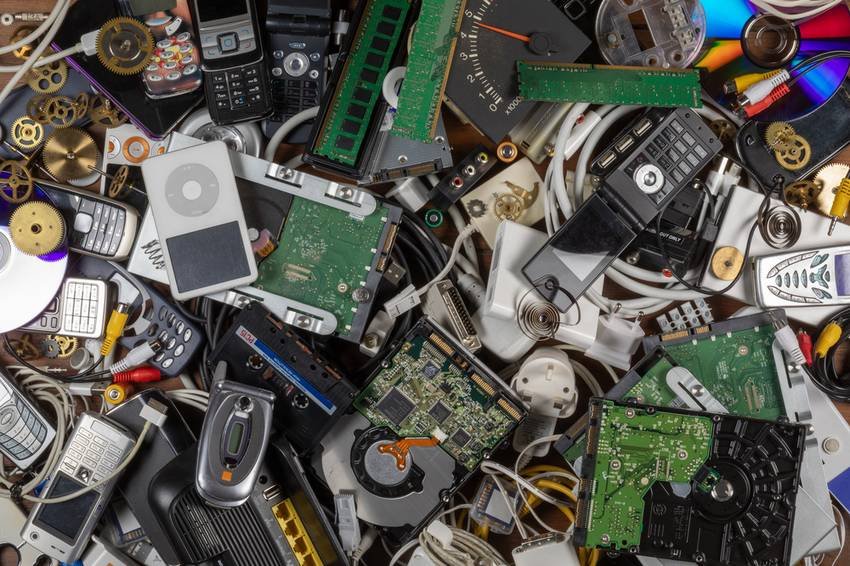
As Uganda moves towards becoming a digital hub in Africa, a significant challenge has emerged: electronic waste, or e-waste. This includes discarded items such as old smartphones, laptops, refrigerators, and solar panels, which are accumulating at an alarming rate. This e-waste poses risks to the environment, public health, and economic development. However, with the right knowledge and proactive measures, Ugandans can turn this challenge into an opportunity for a cleaner, greener, and more prosperous future. Based on the government’s efforts through the Ministry of ICT and National Guidance, here’s what every Ugandan should know about e-waste and how to address it.
E-waste consists of discarded electrical or electronic devices, such as mobile phones, computers, televisions, batteries, and household appliances that are broken, outdated, or no longer in use. These items contain valuable materials like gold and copper, and plastics, but they also include hazardous substances like lead, mercury, and cadmium, which can cause serious harm if not handled properly. In Uganda, the rapid adoption of mobile phones, over 70% of the population owns one, combined with e-governance initiatives and solar energy systems, is contributing to the growth of e-waste. In 2019, Uganda generated 32,000 tons of e-waste, but only a tiny fraction of 0.18 tons was formally recycled, leaving most to be processed unsafely or disposed of in landfills.
E-waste is not just an eyesore; it is a critical issue with significant implications for health, the environment, and the economy. Improper disposal of e-waste can release toxic substances that pose serious health risks. For instance, lead from old computer monitors can harm the brain and kidneys, while mercury from fluorescent bulbs can affect unborn babies and lead to neurological disorders. The burning of e-waste plastics, a common practice in informal recycling, releases dioxins that are linked to cancer. Informal recyclers in areas like Kampala’s Kiteezi landfill or Katwe face the highest risks, working without protective gear, while nearby communities suffer from contaminated air and water. A 2020 study in Kampala revealed elevated lead levels in the blood of informal workers, highlighting the urgency of this issue.
Beyond health concerns, e-waste severely impacts Uganda’s environment. Landfills can leak heavy metals into the soil, affecting crops and livestock, while battery chemicals contaminate rivers and lakes, including Lake Victoria, jeopardizing fish populations and drinking water quality. The burning of e-waste emits toxic fumes, deteriorating air quality and contributing to climate change. Without proper management, Uganda’s landscapes and biodiversity may face irreversible damage, undermining the nation’s sustainability goals.
Conversely, e-waste presents significant economic opportunities. It is a source of valuable materials that can be recovered. For instance, recycling a ton of mobile phones can yield 300 grams of gold, worth thousands of dollars, along with reusable copper and plastics for manufacturing. By effectively managing e-waste, Uganda can create green jobs in recycling, repair, and research, particularly for its youthful population, where 78% are under 35. The government’s plans for e-waste facilities aim to harness this potential, promoting a circular economy in which waste is seen as a resource.
Uganda’s digital transformation is impressive, with 33 million mobile subscriptions and a 31% internet penetration rate by 2023. However, this progress has led to an increase in e-waste. The United Nations’ 2024 Global E-Waste Monitor warns that e-waste is growing five times faster than global recycling capacity, and Uganda is facing similar challenges. The country’s sole formal e-waste facility in Kampala, operational since 2021, cannot manage the 32,000 tons of e-waste generated annually. Most e-waste is processed informally, using unsafe methods like burning or acid leaching, posing dangers to both workers and the environment.
Public awareness about e-waste remains low; a 2021 study in Kampala found that 80% of residents did not know how to safely dispose of e-waste or understand its risks, often mixing electronic items with regular household waste. Additionally, Uganda faces challenges from imported e-waste, as second-hand electronics and illegal shipments from developed countries contribute to the waste burden, quickly becoming outdated. The prevalence of informal recyclers who lack training and protective equipment further complicates the issue, as their unsafe practices prioritize short-term profits over long-term health and environmental safety.
The Ugandan government, led by the Ministry of ICT and National Guidance, is taking decisive action to address the issue of electronic waste (e-waste). Since 2012, Uganda has established a strong policy framework, beginning with the E-Waste Management Policy, followed by 2016 guidelines that banned harmful practices such as open burning and unregulated dumping. The 2020 National Environment Regulations further strengthened these efforts by requiring licensed facilities for e-waste disposal and enforcing accountability measures. A key initiative, known as Extended Producer Responsibility (EPR), mandates that companies producing or importing electronics manage the disposal of their products at the end of their life cycle. Recent regulations announced in 2025 ensure strict enforcement, requiring compliance by licensed handlers.
Infrastructure development is also a priority. The Kampala e-waste facility, launched in 2021, is designed to collect, sort, and recycle e-waste, thus reducing environmental harm and creating jobs. There are plans for regional centers in Gulu, Mbarara, and Mbale to make recycling accessible across the country. In December 2024, the government announced negotiations with the World Bank to fund a modern, centralized facility capable of handling complex waste such as batteries and solar panels, demonstrating a commitment to scaling up solutions.
Community-driven initiatives are gaining momentum. In the Bidibidi Refugee Settlement, a pilot project repaired over 3,400 solar lanterns by 2023, generating jobs and reducing waste. This model has the potential to be expanded to other electronics. Public-private partnerships with companies and NGOs, such as the Global Green Growth Institute, are supporting sustainable recycling and job creation. A stakeholder workshop held in April 2025 at the Sheraton Kampala validated a national e-waste study, bringing together government, businesses, and communities to refine strategies. Upcoming public awareness campaigns will utilize radio, social media, and community events to educate Ugandans on safe disposal practices, addressing the existing awareness gap.
Every Ugandan has a role to play in managing e-waste responsibly. Instead of throwing electronics in regular trash or burning them, both of which pollute the environment, you should take old phones, batteries, and appliances to the Kampala e-waste facility or licensed handlers. Contact your local government or the National Environment Management Authority for guidance on collection points. Some manufacturers, under the EPR program, may offer take-back initiatives when you purchase new devices, so be sure to check with retailers.
Education is essential. Learn about the risks associated with e-waste, such as how old batteries can leak toxins into soil used for farming, and share this knowledge with family and neighbors. Stay updated through radio programs or social media campaigns from the Ministry of ICT regarding safe disposal methods. Encourage schools to teach children about e-waste, fostering a culture of sustainability. Supporting recycling and repair initiatives is a practical step as well. Recycle e-waste at formal facilities to recover valuable materials, which in turn boosts Uganda’s economy. Before discarding devices, consider repairing them, as seen in the Bidibidi project, which extends the lifespan of devices and saves money. When purchasing electronics, opt for durable, repairable products from brands with established recycling programs.
Advocacy can help amplify your impact. Urge local leaders to establish e-waste collection points, especially in rural areas, and support policies like EPR by choosing to buy from compliant companies. Join community initiatives or engage with NGOs partnered with organizations like UNDP or IOM to contribute to e-waste solutions. These actions, large or small, can make a significant difference.
E-waste is not only a challenge; it also presents a significant opportunity for building a sustainable Uganda. As Commissioner Ochero Michael stated, the aim is to ensure that technology benefits the environment while promoting the digital economy and public health. By effectively managing e-waste, Uganda can protect its rivers, soils, and air, safeguarding natural treasures like Lake Victoria. This initiative can also protect communities from toxic exposure, leading to healthier lives. The 32,000 tons of e-waste generated annually could power economic growth; for instance, recycling just 10,000 tons of mobile phones can yield gold worth $200,000 enough to fund schools or clinics. Additionally, green jobs in recycling and repair can empower youth and women, supporting Uganda’s youthful demographic.
Regionally, Uganda has the potential to lead by example, inspiring its East African neighbors, such as Kenya and Rwanda. The establishment of the Kampala facility, the creation of regional centers, and partnerships with the World Bank are steps toward this vision. However, public participation is crucial for success. By transforming e-waste into a valuable resource, Uganda can strengthen its circular economy, reduce reliance on mining, and contribute to global sustainability goals, such as responsible consumption and climate action.
E-waste is a shared responsibility. As Uganda embraces its digital future, it is essential for citizens, businesses, and communities to take action to ensure that technology does not come at the expense of health or the environment. Start today: find a recycling point, repair an old device, or raise awareness about the risks of e-waste. Together, Ugandans can transform e-waste from a growing problem into a cornerstone of a sustainable, prosperous nation. For more information, reach out to the Ministry of ICT and National Guidance, NEMA, or visit the Kampala e-waste facility. Let’s make e-waste a story of opportunity rather than harm.
Entertainment
Affordable Music DAWs for Ugandan Producers to Create Hits in 2025
Accessibility, affordability, and versatility are crucial in this dynamic market.

As Uganda’s music scene thrives, incorporating Afrobeat, dancehall, and local rhythms into tracks with global appeal, producers need dependable Digital Audio Workstations (DAWs) to bring their creative visions to life. Accessibility, affordability, and versatility are crucial in this dynamic market. This guide, based on options available explores the best DAWs for Ugandan producers, emphasizing cost, ease of use, and inspiration from notable songs over the past decade to highlight their potential.
FL Studio is a standout choice as a beat-making powerhouse, priced at a one-time fee of $99 for the Fruity Edition (approximately UGX UGX 370,000). With lifetime free updates, it offers great long-term value. Its intuitive piano roll and drum sequencing make it ideal for creating the driving beats central to Uganda’s danceable genres, fitting tight budgets for emerging producers. Notable tracks like Post Malone’s “Rockstar” (2017), built using FL Studio’s trap features, illustrate how to layer rhythms and hooks, which align well with Uganda’s beat-driven sound. Similarly, Murda Beatz’s work on Migos’ “MotorSport” (2017) showcases FL Studio’s hip-hop capabilities. Starting with the Fruity Edition and upgrading to the Producer version for $199 as projects grow is a smart investment.
Reaper provides an affordable all-rounder option at just $60 (around UGX UGX 222,000) for a personal license, along with a 60-day fully functional trial that’s practically free if timed well. Its lightweight design ensures smooth performance on basic laptops common in Uganda’s second-hand market. Reaper excels at recording live vocals or instruments, making it suitable for organic production styles, like in Phoebe Bridgers’ “Kyoto” (2020), which expertly blends acoustic and electronic elements, a great blueprint for soulful, narrative-driven tracks. Pairing it with free web plugins keeps costs minimal.
Ableton Live presents a creative playground, starting at $99 for the Intro version and reaching up to $749 for the Suite, with all purchases being one-time fees. While the full Suite can be expensive, it offers flexibility. The loop-based workflow is perfect for live remixing and electronic fusion, which resonates with Uganda’s club culture. The Intro version is budget-friendly, while the Suite’s extensive stock tools can reduce the need for additional plugins. Billie Eilish’s “Bad Guy” (2019), produced by Finneas using Ableton, exemplifies its minimalist yet danceable style, making it ideal for innovative Afro-pop. Skrillex’s “Bangarang” (2015) reflects the software’s live performance potential. Watching for holiday discounts, like the Suite possibly dropping to around $560 (approximately UGX 2.07M), can ease the investment burden.
Studio One offers a streamlined starter option for $99 for the Artist edition or $19.99/month (approximately UGX 74,000) for the Studio One+ subscription. Its drag-and-drop simplicity and built-in effects make it beginner-friendly, while the subscription’s cloud storage aids collaboration across regions though the one-time purchase avoids ongoing fees. Charlie Puth’s “Attention” (2017), crafted in Studio One, showcases polished vocals and mainstream-ready production which is perfect for radio hits. Testing the 30-day trial and sticking with the Artist edition if subscriptions don’t work out is a practical strategy.
Logic Pro is the go-to option for Mac users, priced at a one-time fee of $199.99 (around UGX UGX 740,000) or $4.99/month (UGX 18,500) for iPad. For the increasing number of Apple users in urban studios, its value packed with plugins is unmatched. The iPad version adds portability for mobile creators. Calvin Harris’s “Slide” (2017) uses Logic’s synths and vocal processing for a polished finish, while Olivia Rodrigo’s “Drivers License” (2021) taps into its emotional pop depth. Though it requires Apple hardware, it serves as a powerful tool if accessible.
For those seeking free alternatives, Cakewalk offers a fully free option with no limits, ideal for recording on Windows PCs. Great for live band sessions or gospel choirs in budget setups. Additionally, trials from Ableton (90 days), Studio One (30 days), and others provide no-cost testing grounds to get started.
In considering practicalities, cost conversion is essential; $1 equals roughly UGX 3,700, making $99 feel steep for some. Therefore, Reaper at $60 and FL Studio at $99 with lifetime updates are the best value picks. Subscriptions like Studio One+ at $19.99/month could strain inconsistent incomes. Hardware-wise, Reaper and FL Studio can run on low-spec machines (4GB RAM, 2GHz CPU), which are widely available in Uganda’s markets, while Ableton and Studio One require slightly more power but remain manageable. Additionally, with frequent power outages in the region, offline-capable DAWs all listed except Studio One+ due to its cloud features are safer bets. Utilization of free plugins from sites like KVR Audio can also help stretch budgets further. For those concerned about learning curves, FL Studio and Studio One are beginner-friendly, while Ableton and Reaper reward practice and exploration.
Drawing from hit songs, FL Studio empowers “Rockstar” (2017) with trap beats suited for Uganda’s urban sound and “MotorSport” (2017) with layered hip-hop energy. Reaper fuels “Kyoto” (2020) for raw, emotional production that excels in storytelling. Lastly, Ableton drives “Bad Guy” (2019) with its minimal pop and dance elements, and “Bangarang” (2015) highlights its versatile capabilities.


Uganda Launches Evacuation of Nationals from South Africa Amid Rising Xenophobic Violence

Otto von Bismarck, The Marketing Genius Who Built an Empire and Hastened His Own Downfall

Bank of Uganda Sets A Bold Push Toward Digital Payments With New Cash Withdrawal Limits.


-

 Entertainment2 years ago
Museveni’s 2025 Copyright for Musicians breakdown
-

 Sports1 year ago
The Transformative Impact of World Cup Qualification for Uganda
-

 Business2 years ago
The 9 worst mistakes you can ever make at work
-

 Policies2 years ago
Breakdown of the Uganda Police Force Annual Crime Report 2024
-

 Business2 years ago
Uganda’s Ministry of Finance projects significant growth opportunities in 2025
-

 Entertainment2 years ago
Uganda Cracksdown On Vulgar Music Content | Gloria Bugie, Shakira Shakira, targeted
-

 Policies2 years ago
Is Uganda’s Shs10m Fine the WORST Thing for Cohabiting Couples?
-

 Health2 years ago
Breaking down the Malaria Vaccine Rollout in Uganda