
Blog
Spirit Airlines! A Cautionary Tale for the External Marketing Environment.
For marketers and business strategists, Spirit’s fate underscores a vital lesson. Internal strengths, such as creative social media engagement, distinctive branding, and operational efficiency, are important, but they cannot overcome prolonged adversity in the external sphere.


The shutdown of Spirit Airlines on May 2, 2026, clearly illustrates how government policies and activities within the external marketing environment can undermine even the most innovative business models. To succeed in external marketing, companies must deeply understand and adapt to uncontrollable outside forces, including political and legal factors, as these directly shape the products or services they can offer consumers and the prices they can charge.
As a pioneer in the ultra-low-cost carrier segment, Spirit Airlines built its brand identity around extreme affordability; symbolized by bright yellow aircraft, bare-bones fares, and pay-for-what-you-use extras that made air travel accessible for millions who might otherwise have remained grounded. This minimalistic and accessible positioning truly democratized flying in the United States. However, effects from COVID19 and successive government interventions across different administrations eroded the economic foundation necessary to sustain that promise.
Entering the post-pandemic era, Spirit was already vulnerable. The trend toward “revenge travel” favored premium experiences over no-frills options, while operational challenges and occasional negative publicity from onboard incidents put additional pressure on the airline. In response, Spirit pursued a merger with JetBlue in a deal valued at approximately $3.8 billion. This merger promised greater scale, improved route optimization, financial breathing room, and the ability to invest in fleet modernization and marketing while preserving low fares for price-sensitive travelers. However, the Biden administration’s Department of Justice and Department of Transportation actively opposed and ultimately blocked the merger in early 2024. Regulators argued that eliminating Spirit as an independent low-cost disruptor would reduce competition and drive up fares across the industry. A federal judge agreed, framing the decision as a consumer protection measure. In reality, this political-legal stance removed Spirit’s clearest path to stability, forcing it into repeated bankruptcy proceedings and prolonged financial struggles.
By the time the Trump administration took office, Spirit had filed for Chapter 11 bankruptcy multiple times and was desperately seeking assistance. The airline requested approximately $500 million in government aid as part of its restructuring efforts. Negotiations involved stringent conditions, including the possibility of heavy federal equity stakes, potentially reaching 90 percent ownership with later resale options. Ultimately, these talks collapsed without a deal, as the administration prioritized fiscal restraint and America First policies that Spirit and its creditors could not accept.
Simultaneously, broader government foreign policy decisions escalated tensions with Iran, leading to conflicts that disrupted global oil flows through the Strait of Hormuz. As a result, jet fuel prices roughly doubled in a short time, exceeding the levels anticipated in Spirit’s restructuring plans. Spirit’s leadership explicitly cited this sudden and sustained surge in fuel costs as the final blow that left them with no alternative but to wind down operations. Although administration officials contended that Spirit’s underlying weaknesses predated the war and that fuel shocks were not the sole cause of its demise, the timing proved catastrophic for an airline operating on razor-thin margins.
This sequence of events reveals the interconnected and often unpredictable power of the political-legal dimension in the external marketing environment. One administration’s aggressive antitrust enforcement prevented consolidation that might have preserved the ultra-low-cost carrier model, while the next administration’s approach to bailouts and geopolitical engagement introduced new cost pressures and withheld necessary support. Although neither policy was designed explicitly to target Spirit, both directly undermined the economics of serving budget-conscious passengers.
Spirit carried approximately 3 to 4 percent of U.S. air travelers and had climbed in rankings among North American carriers, exerting downward pressure on fares across the industry as a competitive force. Its disappearance now leaves a significant portion of American travelers, particularly those unable to afford $400-plus ticket prices without viable low-cost options on many routes. While competitors may absorb some capacity, higher average fares and reduced service to smaller or leisure-focused markets are likely in the short term.
For marketers and business strategists, Spirit’s fate underscores a vital lesson. Internal strengths, such as creative social media engagement, distinctive branding, and operational efficiency, are important, but they cannot overcome prolonged adversity in the external sphere. Government actions can function like invisible hands, either nurturing or dismantling market segments. In this case, regulatory decisions and foreign policy ripples combined to create a perfect storm that ultimately dismantled Spirit Airlines.

Opinions
Before You Write Off Uganda, Ask What You Have Contributed
Singapore’s transformation offers lessons in leadership, policy, and institutional reform. Rather than simply admiring successful countries, Ugandans should study their journeys and identify what can work at home.


They say travelling is one of the few things you will never regret spending money on. But why do some of us travel? Why do I travel?
I travel to learn, to experience, and to see what the world has to offer in terms of economic progress, infrastructure, governance, and development. I travel to benchmark. We study what has worked elsewhere, identify the lessons worth learning, and explore how to adapt them to our own circumstances and the needs of our people.
It is our responsibility to contribute to the development of our country.
And then there are people like Dj City Gal, in an engagement with renowned Ugandan rapper Big Tril. Watch here: Everything she said may be true, but what was the purpose of this? Beyond pointing out what is wrong, what has she done that can be counted as a contribution to Uganda’s development?
She referenced Singapore. But does she understand where Singapore came from and what it took to become the country it is today?
Does she know the circumstances surrounding Singapore’s separation from Malaysia in 1965? Does she understand the challenges Lee Kuan Yew and his government faced, the policies they pursued, and the difficult decisions and institutional reforms that helped transform Singapore?
China has also studied and drawn lessons from Singapore’s economic development experience. But who did Singapore itself learn from? What countries, systems, and ideas influenced the people who built the Singapore we admire today?
These are the questions people with a development mindset ask. We do not simply admire successful countries; we investigate their journeys. We look at the people who inspired them, the systems they adopted, the mistakes they made, and the lessons we can apply to our own circumstances.
Uganda will still be here long after we are gone. The question is: What will your contribution have been?
It is perfectly fine to criticise individual Ugandans. You can love them, dislike them, agree with them, or disagree with them. But do not confuse the actions of particular individuals or those in positions of responsibility with the entire country.
Uganda is not one person. It is all of us.
Lumping an entire nation together in criticism because of the actions of a few is neither fair nor constructive. Direct your criticism at the people responsible, the decisions they make, and the systems that enable them. Do not make every Ugandan a defendant in a case they had no part in creating.
Finally, development begins at home. To everyone in that video, I have a few questions. What meaningful development have you contributed to your home? What have you done for your neighbourhood? Your village? Your parish? Your district? Your region? And beyond all that, what have you contributed to Uganda as a whole?
These questions are not meant to suggest that individual effort alone can solve every national problem. Government has a responsibility to provide leadership, build infrastructure, deliver public services, and create an environment in which citizens can thrive. Holding leaders accountable is necessary. But so is recognising that we, as citizens, also have a role to play.
Before writing off an entire country, consider what you can do to make your own corner of it better. Nobody has stopped you from contributing to the development of your home, your community, or your country.
And if you genuinely believe that your future lies elsewhere, you are free to seek opportunities beyond Uganda’s borders. But leaving should not be confused with contributing, just as staying should not automatically be mistaken for patriotism.
The real question is not simply what Uganda has failed to do for you, but also what you are doing, within your means and responsibilities, to make Uganda better.
Business
Standard Chartered Uganda Retail Banking Migration to Absa Set for November 2026
Standard Chartered Uganda’s retail banking migration to Absa is set for November 2026. Here’s what customers need to know about account transfers, digital banking registration, debit cards, recurring payments, and customer support.

Standard Chartered Bank Uganda’s Wealth and Retail Banking (WRB) business is scheduled to migrate to Absa Bank Uganda on November 13, 2026. Customers can access their Absa accounts, services, and digital banking channels starting November 16, 2026.
In separate communications to customers, both banks outlined the transition timelines and arrangements, which will involve transferring customers’ existing banking relationships to Absa.
On October 13, 2026, Standard Chartered confirmed that the migration would be completed on November 13. The bank assured customers that their existing account terms and conditions, banking facilities, and services would remain unchanged until the migration is fully completed.
Absa Bank Uganda has indicated that final migration and integration activities will occur over the weekend of November 13-15, 2026. Access to Absa accounts and banking channels will commence on November 16.
Absa has assured customers that their current banking arrangements will remain unchanged after the transfer. This includes current and savings accounts, term deposits, loans, insurance policies, wealth products, and other banking facilities such as overdrafts.
The bank has confirmed that existing loan terms and repayment arrangements, as well as the terms, conditions, and benefits associated with other banking products, will remain the same.
As part of the transition, customers will receive separate communications containing their new Absa account details. These details may be required when registering for Absa digital banking services.
Customers will need to set up their digital banking profiles using the Absa Uganda mobile application after receiving confirmation that digital access has been enabled.
The registration process involves downloading the official Absa Uganda app, selecting the “Standard Chartered Customer” option, and providing the required identification details, date of birth, and new Absa account number. Customers will then complete facial verification, create a new password, and register their primary device before setting up a four-digit passcode.
Customers’ existing Standard Chartered usernames will remain unchanged; however, they will need their new passwords and passcodes to access their profiles from November 16, 2026, onwards.
Absa has also confirmed that debit cards are currently being processed, and customers will receive further information on delivery arrangements through the bank’s approved service providers. Existing cheque books will be replaced and delivered alongside the new debit cards, with collection available from the Standard Chartered Bank Speke Road Branch as an alternative.
Customers are encouraged to monitor official SMS and email communications from Absa to obtain their new account details. Once received, these details should be shared with employers, service providers, and other organizations that make payments to or collect payments from their accounts.
Customers should also review standing orders, direct debits, subscriptions, and other recurring payment arrangements linked to their accounts, following Absa’s instructions for any necessary updates.
To prepare for digital banking registration, customers should download the official Absa Uganda mobile application when instructed and have their National Identification Number (NIN) or passport number (for non-Ugandan nationals), date of birth, and new Absa account number ready. Registration should only be completed once the bank confirms that digital access is enabled.
Customers are also advised to monitor official communications regarding the delivery or collection of their new debit cards and replacement cheque books. With final integration activities scheduled for November 13-15, customers should plan accordingly and follow official instructions from both banks regarding changes to their accounts and services. Until the migration is complete, they should continue using the existing banking channels of Standard Chartered.
Until the migration is complete, Standard Chartered customers may continue to access banking services through the bank’s existing branches, ATMs, contact centers, and Relationship Managers.
For assistance before the migration, customers can reach Standard Chartered at ug.service@sc.com or through its 24-hour helplines at +256 313 294 100 and +256 200 524 100.
After the transition, customers can contact Absa through the relevant customer support channels. Personal banking customers can email Absa.Uganda@absa.africa, Prestige customers can reach out at PrestigeBanking.Uganda@absa.africa, Premier customers can contact PremierBanking.Uganda@absa.africa, and SME customers can use BusinessBanking.Uganda@absa.africa.
Customers can also call Absa’s toll-free line at 0800 222 333 or use +256 312 218 348 for assistance.
Agriculture
A restriction on smallholder maize would trade food security for a cash-crop bet Uganda has already lost once
A restriction on smallholder maize is not intensification. It is prohibition.Most Ugandan farms are already under four acres. A legal line at that size covers the people who grow the staple, not a fringe of inefficient plots.

Prime Minister Robinah Nabbanja states that President Museveni has directed her to draft legislation that would prohibit farmers with less than four acres from growing maize, sugarcane, tobacco, and cotton. Instead, smallholders would be encouraged to focus on coffee, poultry, piggery, dairy, and fruit cultivation, which are considered high-value crops at the core of the Four-Acre Model. The aim of this policy is to maximize returns from limited land. However, there is a concern that such a restriction may reduce the cultivation of maize, which is a staple crop for many farming households, especially during times of drought, rising food prices, and increasing regional demand for grain. This is not merely a debate about agricultural intensification; it centers on the issue of prohibition.
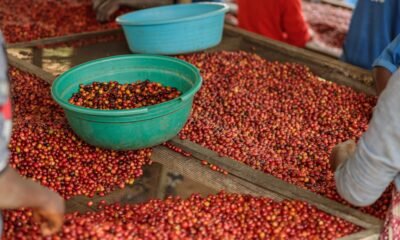
Maize is already recognized as the main temporary crop in Uganda. According to the Uganda Bureau of Statistics (UBOS) 2019 Agricultural Survey; the last comprehensive survey detailing crop production to maize was the most cultivated temporary crop, grown by 69 percent of agricultural households. In that season, Uganda produced 2.8 million metric tonnes of maize, a decrease from 3.4 million tonnes in 2018. The regions leading in production included Buganda North with 710,000 tonnes, followed by Bunyoro at 561,000, and Buganda South at 266,000. Of the total harvested, 63.4 percent was sold raw while 27.4 percent was retained for household consumption. Over the past decade, households have increasingly shifted towards growing cassava, maize, and bananas while moving away from millet and beans. Maize is not a secondary crop; it is a core staple for many households and a primary source of income.
It is estimated that around 90 percent of Uganda’s maize is produced by smallholders, a figure often cited in agricultural research and value-chain reports, including those from Wageningen University and CIMMYT-related maize studies. However, this figure is not published by UBOS itself. While UBOS does report who grows maize, how much is produced, and its uses, it does not break down national production into smallholder versus estate contributions. Research literature that uses the 90 percent figure typically characterizes production as being led by households cultivating less than two hectares, growing maize primarily for food and income. Some reports mention millions of households growing maize, with varying cultivation rates depending on the survey and year. What remains consistent is the structure of production: commercial estates are in the minority, and small farms make up the majority.
A ban on maize cultivation for smallholders would not be a minor adjustment. The average Ugandan farm size is already around 1.2 to 1.5 hectares, with many households farming less than one hectare. Reports from Kilimo Trust and other value-chain work indicate that maize plots are commonly under two hectares. Therefore, a legal limit of four acres would encompass most of those who currently grow maize.
The Four-Acre Model allocates one acre for food crops, but enacting a law that prohibits maize cultivation on smaller plots contradicts this framework. While coffee, fruit, and livestock can provide cash income, they do not replace staple foods like posho (maize flour), which is essential for household meals, including school lunches and the feed necessary for poultry and pigs. Both UBOS’s figure of 27.4 percent of maize used for household consumption and research estimates suggesting even higher figures highlight that a significant portion of the harvested maize remains within the household food system.
Maize yields in Uganda are low, presenting an argument for increased investment rather than a ban on cultivation. National average maize yields hover around 2.2 tonnes per hectare; approximately 900 kilograms per acre while well-managed conditions can yield between 6 and 8 tonnes, and sometimes higher in controlled research settings. Subsistence plots typically yield between 700 and 1,000 kilograms per acre, whereas high-input plots can reach 1,800 to 2,200 kilograms. The drop in national production from 3.4 million tonnes to 2.8 million tonnes between 2018 and 2019 already highlighted how sensitive output is to weather and input availability.
The yield gap is well-documented, caused by factors such as the use of recycled and informal seeds, low fertilizer application compared to other African countries, reliance on rain-fed production, pests, and climate-related shocks. Flooding can lead to yield losses of nearly 18 percent, while drought can cause a decline of about 10 percent. Projections indicate further national declines of approximately 10 to 12 percent by 2030 if current seed varieties remain unchanged. In northern districts like Lamwo and Pader, extended dry spells in 2024 disrupted flowering and led to poor harvests, prompting local agricultural officials to advise farmers to diversify their crops, as cereals suffered significant losses. This situation calls for the adoption of drought-resistant seeds, improved water management, and assessment of flood risks, rather than a ban on maize cultivation for the farms that still produce the majority of it.
These facts do not indicate that growing maize is unfeasible on plots smaller than four acres; rather, they reveal that public policy has consistently under-invested in this staple crop. Combining improved seeds with better fertilizer application has been linked to substantial yield gains on existing small plots. Advanced hybrid varieties could potentially double yields under current climatic conditions according to modeling studies. Relying solely on a smaller number of large-scale farms to increase maize production assumes that such units will emerge, remain involved in maize production, and sell at competitive prices in domestic markets. This is more of a hope than a concrete plan.
The story of Uganda’s vanilla market serves as a warning, not a peripheral issue. The country has experienced the consequences of shifting smallholders towards high-value export crops, as was seen in Madagascar in the late 1990s.


Before You Write Off Uganda, Ask What You Have Contributed

Standard Chartered Uganda Retail Banking Migration to Absa Set for November 2026

A restriction on smallholder maize would trade food security for a cash-crop bet Uganda has already lost once


-

 Entertainment2 years ago
Museveni’s 2025 Copyright for Musicians breakdown
-

 Sports2 years ago
The Transformative Impact of World Cup Qualification for Uganda
-

 Business2 years ago
The 9 worst mistakes you can ever make at work
-

 Policies2 years ago
Breakdown of the Uganda Police Force Annual Crime Report 2024
-
 Business2 years ago
Uganda’s Ministry of Finance projects significant growth opportunities in 2025
-

 Policies2 years ago
Is Uganda’s Shs10m Fine the WORST Thing for Cohabiting Couples?
-

 Entertainment2 years ago
Uganda Cracksdown On Vulgar Music Content | Gloria Bugie, Shakira Shakira, targeted
-

 Health2 years ago
Breaking down the Malaria Vaccine Rollout in Uganda