
Politics
The Imperative of Strict Accountability: Enforcing Uganda’s Official Secrets Act Against Leakers
In an era of rampant digital leaks, Uganda’s Official Secrets Act (Cap 302) demands strict enforcement against government insiders, journalists, and influencers who compromise national security. Severe penalties – up to 14 years imprisonment – are essential to deter betrayal and protect sovereignty


In Uganda’s rapidly digitizing environment, the unauthorized disclosure of confidential information poses a serious threat to national security, economic stability, corporate interests, and public order. Leaks by government staff, military personnel, social media influencers, journalists, and media houses often stem from ignorance of legal obligations, a desire for fame, political motives, or sheer recklessness. These actions are not just oversights; when they violate non-disclosure agreements (NDAs) or breach the Official Secrets Act (Cap 302), they become serious criminal offenses that warrant severe punishment.
The Official Secrets Act, enacted in 1964 and still in force, explicitly criminalizes the wrongful communication and mishandling of protected information. According to Section 4(1), any person who possesses or controls secret official code words, passwords, sketches, plans, models, articles, notes, documents, or information entrusted in confidence due to their government office, contracts, or employment commits an offense if they:
(a) Communicate it to unauthorized persons, except where duty to Uganda requires such communication.
(b) Use it for the benefit of any foreign power or in a manner that adversely affects Uganda.
(c) Unlawfully retain it or fail to comply with disposal directions.
(d) Fail to take reasonable care, thereby endangering its safety.
Subsection (2) further criminalizes the communication of information related to munitions of war to any foreign power or in any way that prejudices Uganda’s safety or interests. Subsection (3) targets those who knowingly receive such information in violation of the Act (unless they prove it was against their will). Subsection (4) addresses unlawful retention, sharing, or failure to return official documents or code words.
These provisions directly apply to modern leaks: government insiders sharing State House documents via WhatsApp, military officers posting classified promotion lists or operational details on social media, or journalists and influencers disseminating sensitive material without authorization. Recent cases, including UPDF officers jailed for social media leaks and investigations into mass State House document exposures, underscore violations of these rules.
Under Section 15 of the Act, if no specific penalty is specified, offenders are guilty of an indictable offense that carries a maximum imprisonment penalty of 14 years upon conviction. Alternatively, the Director of Public Prosecutions may choose to prosecute before a magistrate, with a maximum possible sentence of 7 years imprisonment. This strict framework reflects the serious nature of actions that endanger national interests, far beyond minor infractions.
While press freedom is constitutionally protected, the Act makes no exceptions for the media. Journalists or reporters who publish leaked confidential information, knowing or having reasonable grounds to believe it was communicated in violation of the Act, commit an offense under Section 4(3). Media houses that sensationalize or fail to verify such material for clicks or narratives amplify the breach, often turning protected information into public weapons that distort facts, incite division, or compromise security.
Social media influencers further exacerbate this issue by originating or sharing damaging posts, sometimes directly involving official secrets, for engagement or personal agendas. Their viral reach can transform isolated leaks into national crises, yet they too fall under the Act’s prohibitions on unauthorized communication or receipt.
The Edward Snowden case serves as a powerful precedent. In 2013, Snowden leaked thousands of classified NSA documents, which led to charges against him under the Espionage Act for unauthorized disclosure and theft, offenses that carry decades in prison. Authorities considered his actions to have caused “tremendous damage” to national security, exposing military secrets unrelated to privacy and potentially aiding adversaries. Snowden fled into exile, demonstrating that bypassing established channels for public disclosure can invoke severe consequences.
In Uganda, similar rationale applies: leaks under the Official Secrets Act can expose defense strategies, oil negotiations, or anti-corruption efforts to foreign powers or internal threats. Just as the U.S. treated Snowden’s breach as a betrayal deserving pursuit, Uganda must rigorously apply the Act’s penalties, which can include up to 14 years of imprisonment, to deter leakers in all roles. Leniency fosters repetition; strict enforcement safeguards national sovereignty.
To protect Uganda’s future, accountability must be unwavering:
- Government staff and insiders who originate leaks violate entrusted confidence and face primary liability under Section 4, risking dismissal, prosecution, and lengthy imprisonment.
- Journalists and reporters who knowingly publish or receive prohibited information must also be held accountable.
By ensuring strict accountability across the board, Uganda can strengthen its commitment to national security and integrity.

Politics
Deepening Uganda-Tanzania Relations Focus on Energy and Regional Peace
The East African Crude Oil Pipeline (EACOP) remains on track, with oil transportation expected to begin in July 2026.
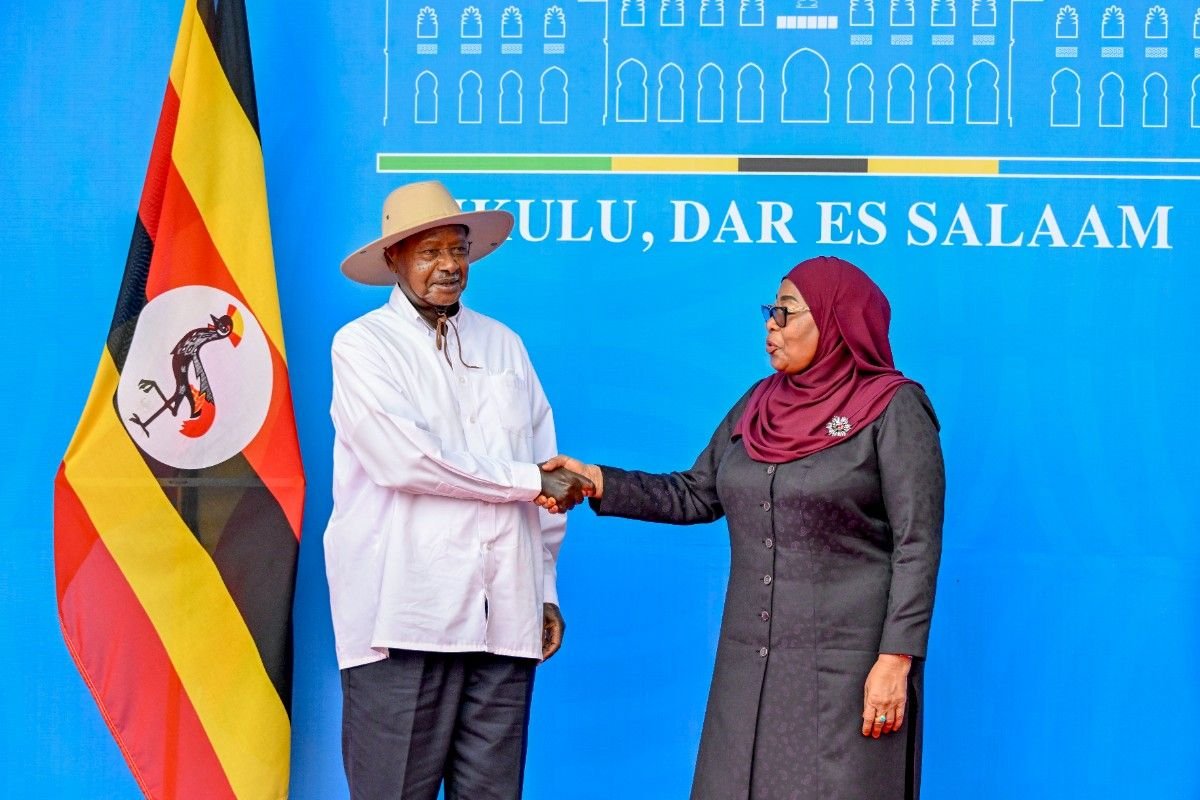
In a significant step toward enhanced bilateral relations, Ugandan President Yoweri Kaguta Museveni visited Tanzania to hold high-level talks with President Samia Suluhu Hassan. The discussions, held in Dar es Salaam, centered on strengthening cooperation in energy development, trade facilitation, infrastructure, and regional peace. While the agenda covered a broad spectrum of mutual interests, the spotlight was firmly on the energy sector, particularly the East African Crude Oil Pipeline (EACOP) and related initiatives that promise to transform the economic landscapes of both nations.
During a joint press briefing following the bilateral meetings, President Samia announced that the two leaders had reviewed the progress of key energy infrastructure projects. She emphasized that the EACOP project remains on track, with oil transportation slated to commence in July 2026. This 1,443-kilometer pipeline, stretching from Uganda’s Albertine Graben to the Tanzanian port of Tanga, represents a cornerstone of East Africa’s energy ambitions, enabling Uganda to export its crude oil reserves for the first time.
The EACOP, a joint venture involving TotalEnergies, China National Offshore Oil Corporation (CNOOC), and the governments of Uganda and Tanzania, is not just a conduit for oil but a catalyst for regional economic integration. President Samia highlighted additional cooperative ventures, including plans for a gas pipeline from Tanzania to Uganda and a refined oil pipeline from Uganda to Tanga. These projects position Tanzania as a vital export corridor for Uganda’s petroleum products, fostering shared prosperity through joint energy production aimed at meeting domestic demands while tapping into regional and international markets.
Building on this momentum, recent developments underscore the project’s commitment to local empowerment and innovation. Just weeks before the presidential summit, on January 30, 2026, EACOP hosted its first Supplier Development Forum of the year at the Sheraton Hotel in Kampala. The event drew over 200 in-person attendees and more than 800 online participants, showcasing robust interest from Ugandan businesses in the project’s commissioning and operations phases.
EACOP Deputy Managing Director John Bosco Habumugisha stressed that local content is integral to the project’s vision, urging Ugandan companies to seize opportunities in specialized equipment, technical services, and procurement. Presentations from industry experts, including Kamal Bouzalmata (Commissioning Manager) and Christophe Carmon (Deputy Field Operations Director), outlined avenues for sustainable engagement, emphasizing collaboration with Tier One contractors and adherence to high standards.
Jimmy Mugerwa from the Industry Enhancement Centre highlighted how such initiatives extend benefits to local communities through capacity building, job creation, and technology transfer. The forum reinforced EACOP’s role in bolstering national content, with the pipeline’s construction combined with Uganda’s Tilenga and Kingfisher upstream projects expected to generate substantial tax revenues for both host governments, create thousands of jobs, and enhance the trade corridor between Uganda and Tanzania.
Innovation is at the heart of EACOP’s design, setting it apart as a forward-thinking infrastructure project. One standout feature is the integration of fibre optic cables with an advanced detection and analytical system for continuous monitoring. This technology enables early detection of soil movements or landslides, identifies potential intrusions along the pipeline’s right-of-way, detects temperature variations signaling leaks or exposures, and allows for sectional isolation via in-line block valves to minimize environmental risks.
Equally impressive is EACOP’s hybrid power generation system, which combines grid connections from Tanzania and Uganda with battery banks, a solar farm at the Tanga terminal, and backup combustion engines. This setup achieves at least a 30% reduction in carbon footprint compared to traditional systems. The 4MWp solar farm, spanning an area equivalent to two football pitches and comprising 6,200 panels, along with battery energy storage systems (BESS) to handle grid instabilities, exemplifies the project’s environmental stewardship. An advanced Electrical Management System (EMS) ensures seamless integration of these diverse power sources, supporting reliable operations across pumping stations and terminal facilities.
Beyond energy, the leaders addressed trade and logistics enhancements. President Samia noted efforts to improve Ugandan traders’ access to Tanzanian ports like Tanga and Dar es Salaam, including requests for extended railway connectivity into Uganda to streamline cargo movement. Both sides committed to eliminating persistent non-tariff barriers, recognizing that such measures will accelerate economic growth and fortify the East African regional market.
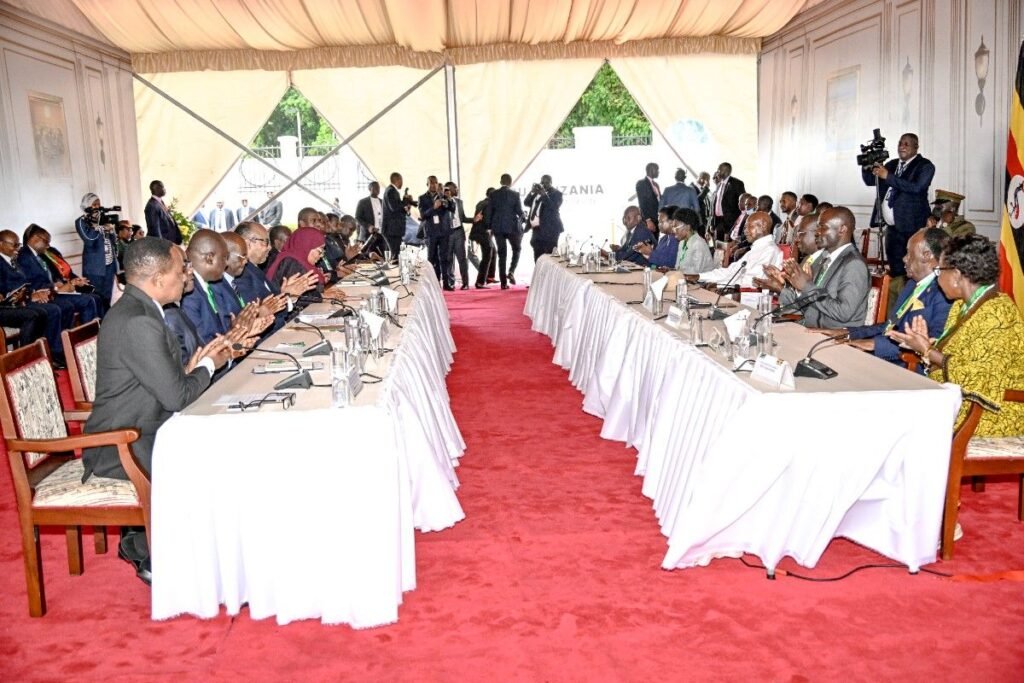
On regional peace and security, the discussions focused on strategies for stability in the Great Lakes Region, with plans for dialogue processes to resolve ongoing conflicts. President Museveni echoed this sentiment, stressing the need to protect Africa’s hard-won independence through economic resilience and unity. He highlighted strategic security as a priority, noting that Uganda and Tanzania had tackled several tactical issues during the talks. Additionally, the leaders explored industrial specialization, with Tanzania leading in locomotive manufacturing and Uganda in textiles, to leverage complementary strengths.
In his remarks, President Museveni framed these collaborations as a continuation of Africa’s liberation struggle, emphasizing that true prosperity stems from producing and selling goods competitively to generate citizen income. He warned against external pressures from powerful nations, underscoring that Africa’s response hinges on internal strength and cohesion.
President Samia warmly welcomed Museveni, calling Tanzania his “home” and congratulating him on the National Resistance Movement’s recent electoral victory, crediting it to the party’s clear ideology and manifesto. She reaffirmed Tanzania’s dedication to close partnership with Uganda.
As the two nations move forward, the Museveni-Samia summit signals a renewed era of collaboration, with the energy sector, particularly the innovative and economically transformative EACOP, poised to drive sustainable development across East Africa. This partnership not only bolsters bilateral ties but also contributes to the broader goal of regional integration and self-reliance.
Politics
Museveni Announces Game-Changing New International Airports in Kigezi and Mbarara as Uganda Celebrates 45 Years of Tarehe Sita
President Museveni praised the UPDF for ensuring peaceful elections and announced major airport developments: Kisoro Airport expansion, a new international tourism airport in Kigezi, and a large trade-focused airport in Mbarara City expected to exceed Entebbe in size. “Peace is secured. Now the skies open for tourism and business,” he stated during the 45th Tarehe Sita Anniversary in Kabale.
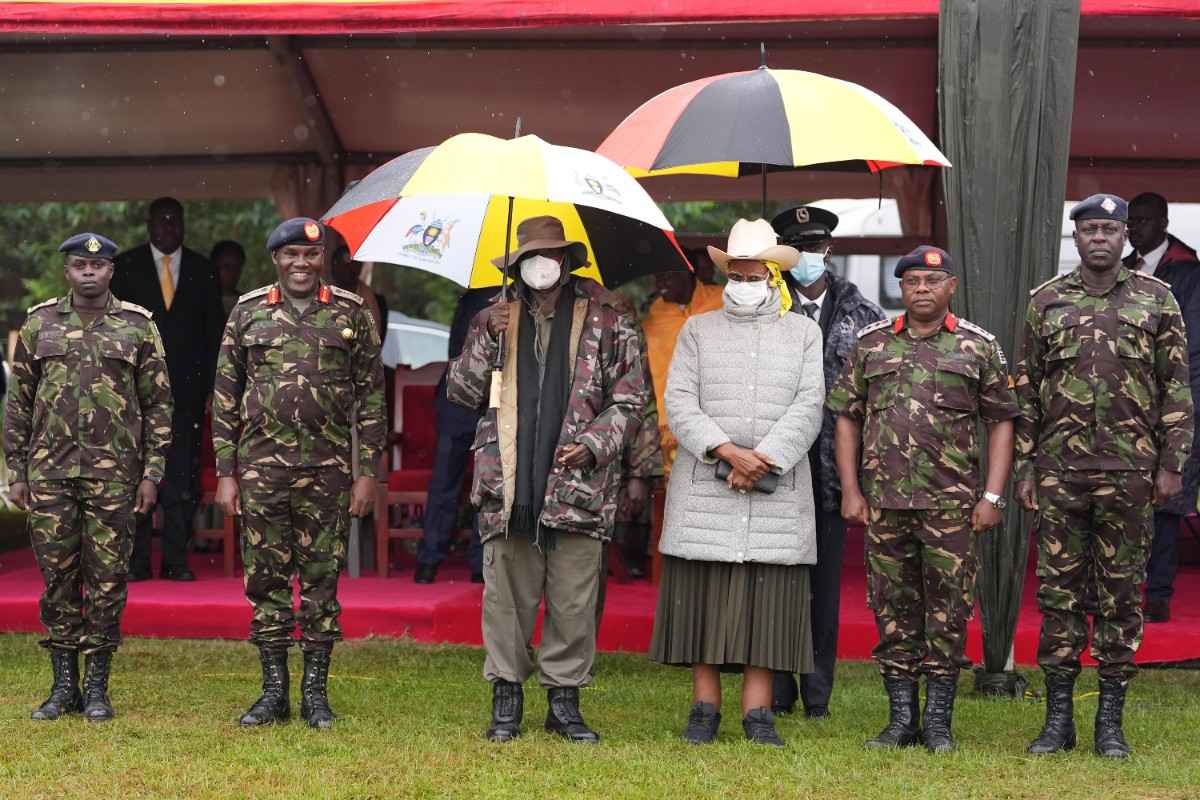
President Yoweri Kaguta Museveni has praised the Uganda People’s Defence Forces (UPDF) and other security agencies for their exemplary role in maintaining peace and stability during the recent general elections, which facilitated a secure democratic process. Speaking at the 45th Tarehe Sita Anniversary commemoration in Kabale Municipality, the President emphasized that their efforts have not only safeguarded the nation but have also laid the groundwork for accelerated socio-economic transformation. This includes significant infrastructure developments, such as new and expanded airports in the southwestern region.
The event, held at the National Teachers’ College (NTC) grounds under the theme “Defending the Gains of the Revolution and Honouring the Sacrifices of the Freedom Fighters: A Call for National Unity, Peace, and Socio-Economic Transformation,” marked the historic launch of Uganda’s Liberation War on February 6, 1981. On that day, 43 National Resistance Army patriots, armed with only 27 rifles, attacked Kabamba barracks, sparking the revolutionary path that has shaped modern Uganda.
President Museveni, accompanied by First Lady and Minister of Education and Sports Maama Janet Museveni, praised the security forces for neutralizing attempts to disrupt the elections. “I want to salute the UPDF and other security forces for the robust security they provided during the recent elections. They did a commendable job,” he stated. He noted that their quick responses thwarted troublemakers, allowing Ugandans to conduct successful and peaceful polls. The President also extended special thanks to the people of Kigezi and the nation for their overwhelming support of the National Resistance Movement (NRM) during the elections.
In a forward-looking address, Museveni linked the revolutionary legacy of Tarehe Sita to Uganda’s current progress toward becoming a high middle-income country. He emphasized the importance of national unity and wealth creation, assuring residents of Kigezi that the region stands to benefit significantly from tourism, commercial agriculture, and manufacturing.
Central to his vision for the region’s future is a bold initiative to improve aviation infrastructure to unlock economic potential. The President confirmed that Kisoro Airport is currently being expanded to better serve visitors to the area’s renowned attractions. He also announced plans for an additional international airport in the Kigezi sub-region, specifically noting land offered by businessman Amos Nzeyi in Kabale District, dedicated to enhancing tourism. This new facility aims to facilitate direct flights for tourists, eliminating the need for long road journeys from Entebbe.
Furthermore, Museveni revealed ambitious plans for a major new international airport in Mbarara City, focused on trade and business. He described this project as a game-changer that would surpass Entebbe International Airport in scale and capacity, enabling direct links particularly with partners in East Asia (such as China) and South America (including Brazil and Argentina). With partnerships already in discussion, this development positions southwestern Uganda as a strategic hub for international commerce, reducing travel times and attracting investment.
These airport initiatives signal a transformative phase for Uganda’s economy. By decentralizing air connectivity beyond Entebbe, the government aims to stimulate regional growth, enhance export opportunities in agriculture and minerals, and make tourism more accessible in areas rich in natural wonders like volcanoes, lakes, and national parks.
The ceremony also featured remarks from key figures. Defence Minister Hon. Jacob Oboth-Oboth congratulated the President on his re-election, while Chief of Defence Forces Gen. Muhoozi Kainerugaba pledged the UPDF’s continued loyalty to advance socio-economic goals and regional security. Gen. Muhoozi affirmed the country’s overall peace, describing the recent elections as the most decisive and trouble-free since 1996.
Awards were presented to distinguished officers for their contributions to liberation and national development, including the inaugural CDF Award for outstanding junior officer Lt. Moses Odongo, who received Shs 10 million and a certificate.
As Uganda commemorates 45 years since the spark of its revolution, President Museveni’s remarks underscore a commitment to building on past sacrifices. With peace secured and infrastructure such as these new airports on the horizon, the focus now shifts to translating stability into prosperity; opening the skies for tourism in Kigezi and trade across the southwest, driving the nation toward its high middle-income ambitions.
Politics
Lessons from America’s Political Division: A Warning for Uganda
Central to America’s division is the mainstream media, which wields immense influence but often prioritizes narrative over neutrality.

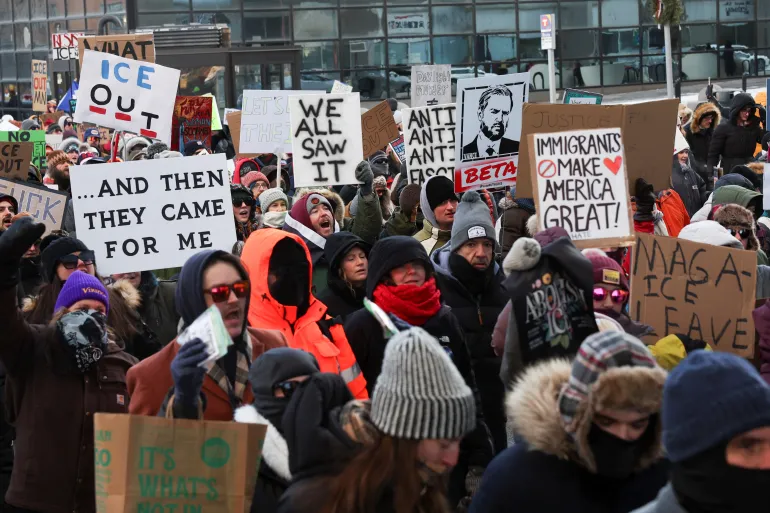
In an era of deepening global interconnectedness, nations like Uganda can draw critical insights from the political turmoil unfolding in the United States. The U.S., once hailed as a beacon of democracy, is now gripped by extreme partisan division that threatens its social fabric and governance. This division manifests in a vicious cycle: one party loses power, incites unrest, implements polarizing policies upon regaining it, and repeats the process. As Ugandans, we must heed these warnings to avoid similar pitfalls, particularly the role of biased media in fueling conflict. By examining the U.S. experience, we can prioritize national unity over unchecked individualism, ensuring media accountability and responsible discourse for the greater good.
The U.S. political landscape operates in a repetitive loop driven by partisan animosity. When Democrats (often aligned with left-leaning ideologies) lose elections, they have historically mobilized protests and legal challenges that escalate into riots or widespread unrest. For instance, following Donald Trump’s 2016 victory, opposition framed as “resistance” included mass demonstrations and accusations of illegitimacy. When Republicans regain power; as with Trump’s return in 2024, they confront these tactics head-on, implementing reforms that provoke further backlash. Democrats then regain office, enact policies perceived as radical (such as expansive social programs or lax immigration enforcement), leading to public disillusionment and economic strain. Inflation surges, crime rates climb in certain areas, and cultural shifts alienate moderates, paving the way for Republican resurgence. This pattern has intensified over decades, eroding trust in institutions and fostering a zero-sum mentality where compromise is rare.
A key driver of this cycle is affective polarization, where Americans increasingly view the opposing party not just as wrong, but as morally corrupt or dangerous. Causes include generational shifts, with younger voters leaning left on social issues while older ones prioritize economic conservatism; geographic sorting, where liberals cluster in urban areas and conservatives in rural ones; and the rise of identity politics, amplifying divisions along racial, cultural, and class lines. The effects are profound: legislative gridlock, as seen in repeated government shutdowns; eroded democratic norms, with events like the January 6, 2021, Capitol riot highlighting how rhetoric can spill into violence; and a public health toll, including increased stress and social isolation.
Central to America’s division is the mainstream media, which wields immense influence but often prioritizes narrative over neutrality. Studies from UCLA indicate that a significant portion estimated at around 80-90% based on analyses of major outlets leans left, with 18 out of 20 prominent sources scoring liberal in bias assessments. Networks like CNN and MSNBC exemplify this, contributing to what many perceive as a coordinated assault on conservative figures, particularly Donald Trump. This bias didn’t emerge overnight; it stems from a historical shift where journalists increasingly identify as Democrats, leading to skewed coverage that demonizes opponents.
The origins trace back to Trump’s 2016 campaign, when his outsider status and blunt rhetoric clashed with media elites. Coverage of Trump has been overwhelmingly negative; about 92% in his first 100 days of the second term, according to media watchdogs like the Media Research Center focusing on scandals while downplaying achievements. Examples abound: Trump’s “Muslim ban” was labeled xenophobic, yet similar travel restrictions under prior administrations went unchallenged. This selective outrage extends to policy critiques, where media outlets amplify progressive voices while marginalizing conservative ones, creating echo chambers that radicalize audiences.
Immigration policy vividly illustrates media double standards. Previous presidents, including Bill Clinton (who deported over 12 million), George W. Bush (nearly 2 million formal removals), and Barack Obama (over 3 million, earning the moniker “Deporter-in-Chief”), enforced strict border measures without widespread media condemnation. CNN even embedded reporters in ICE raids under Obama, portraying them positively as necessary enforcement, with a 2016 segment granting “exclusive access” to operations in Chicago.
Contrast this with Trump: His deportation efforts, though fewer than Obama’s (around 2 million), were vilified as cruel and racist. Under Biden, policies like expanded parole programs and reduced interior enforcement led to a surge, with unauthorized immigrants reaching a record 14 million by 2023 and over 8 million encounters at the border. This influx strained resources, contributing to crime spikes in some cities and public backlash that helped Trump’s 2024 reelection on a deportation platform. Yet, media outlets and Democrats framed Trump’s plans as “mass deportations” inciting violence, stoking protests and state-level resistance (e.g., sanctuary cities refusing ICE cooperation). When confrontations occur such as arrests turning violent, the blame shifts to Republicans, fueling more unrest and electoral shifts.
This propaganda tactic follows a pattern: Lose elections, amplify outrage through media, incite resistance, blame opponents for fallout, regain power, implement unpopular policies (e.g., “woke” ideologies or unchecked migration), alienate the populace, and lose again. The result? Deepened division, with families fractured and communities polarized.
Uganda, with its own history of political transitions and media influence, must learn from America’s mistakes to foster sustainable development. Media is a vital communication tool but can become a society’s worst enemy when it peddles bias over facts. To prevent division, Uganda should enforce stricter regulations: Revoke licenses for outlets spreading negative propaganda, as unchecked narratives erode trust. Social media moderation is essential, holding users accountable for speech that incites violence or insurrection echoing global calls to curb misinformation without stifling debate.
For societal harmony, individual freedoms must sometimes yield to collective well-being. Criticizing government is healthy, but it should include constructive solutions, not mere provocation. By limiting divisive rhetoric and promoting balanced reporting, Uganda can avoid the U.S.’s fate, building a cohesive nation focused on progress rather than perpetual conflict.


The Hidden Cost of Overloading Viewers: How Aggressive YouTube Ads Fuel Ad Fatigue and Damage Brands

People Should Check Themselves Before Crashing Out and Talking About How Bad Uganda Is.

The Imperative of Strict Accountability: Enforcing Uganda’s Official Secrets Act Against Leakers


-
 Entertainment1 year ago
Museveni’s 2025 Copyright for Musicians breakdown
-
 Business1 year ago
Uganda’s Ministry of Finance projects significant growth opportunities in 2025
-

 Policies1 year ago
Breakdown of the Uganda Police Force Annual Crime Report 2024
-

 Business1 year ago
The 9 worst mistakes you can ever make at work
-

 Policies1 year ago
Is Uganda’s Shs10m Fine the WORST Thing for Cohabiting Couples?
-

 Sports1 year ago
The Transformative Impact of World Cup Qualification for Uganda
-

 Health1 year ago
Breaking down the Malaria Vaccine Rollout in Uganda
-
 Entertainment1 year ago
Isaiah Misanvu Teams Up with Nil Empire for a Soul-Stirring Anthem of Gratitude and Transformation “Far Away”